What Denver's Used Car Inventory Actually Looks Like Right Now in Mid-2026
A lot-by-lot dispatch from South Broadway to Arapahoe Road on what's in stock, what it costs, and which dealers are playing it straight

A lot-by-lot dispatch from South Broadway to Arapahoe Road on what’s in stock, what it costs, and which dealers are playing it straight
On a Tuesday afternoon in early June, a 2022 Toyota RAV4 AWD with 41,000 miles sat on the front row of a South Broadway independent lot with a handwritten sticker of $32,500. The sales manager — who asked that his name not be used because his ownership group discourages individual press comment — offered this without much prompting: “People come in here saying they read that prices are back to normal. I tell them to show me where. Because this is not 2019.” He gestured at the RAV4 as he said it.
He’s not wrong, and he’s not entirely right either. The national narrative on used car prices in 2026 has settled into something close to “problem solved”: inventory is up, the Manheim Used Vehicle Value Index has retreated from its 2022 highs, and headlines from automotive trade publications declare the market “normalized.” That’s accurate in aggregate. It’s just not what Denver buyers are experiencing lot by lot.
Here’s the honest picture. Dealer and lot managers interviewed for this piece in late May and June 2026 report average transaction prices on used vehicles clustered around $26,000 to $28,500. That’s down from the frenzied peak of $31,000–$33,000 in 2021 and 2022, but still running 25 to 35 percent above the pre-pandemic Denver baseline of roughly $20,000–$22,000. For buyers who sat out the pandemic market hoping for a full correction — and I know people who did exactly that — the correction came, but it stopped well short.
Buyer’s Market or Seller’s Market? The Summer 2026 Verdict
June 2026 is a partial buyer’s market, tilted modestly toward buyers on specific segments: sedans, older compact SUVs, and high-mileage trucks. Anything with low miles, recent model years, AWD, or a Toyota or Honda badge remains firmly in seller territory. That’s a narrower definition of “buyer’s market” than most people walking onto a lot this month are expecting.
Dealers along the Arapahoe Road corridor report that slower-moving inventory is aging on their lots in a way that wasn’t common during 2022 and most of 2023. That aging inventory creates real negotiating room. A Subaru Outback with 70,000 miles sitting since April is a car a manager wants gone. A 2024 Honda CR-V with 22,000 miles that came in last week is not. The difference matters enormously, and most buyers never think to ask which situation they’re actually in.
Two Denver-specific forces keep the local market tighter than comparable metros. Population has grown steadily, and new residents need vehicles quickly — they can’t afford to wait six months for the right deal. Colorado’s weather geography also creates persistent demand for AWD and 4WD that has no parallel in Phoenix or Dallas. Front Range buyers want all-wheel drive even for vehicles that will rarely see a mountain pass, and I’d include myself in that category, so I’m not throwing stones. But that preference compresses supply and elevates prices on the exact vehicles most people want, regardless of what the Manheim Used Vehicle Value Index says nationally.
Two calendar windows offer real tactical advantages for buyers willing to time the purchase. The first is the June 30 quarter-end close. Franchise dealers running sales targets feel month-end and quarter-end pressure simultaneously, and managers have more latitude on the final numbers than they will on July 2. The second is mid-to-late August, when back-to-school retail promotions shift consumer attention elsewhere, lot traffic drops, and inventory that failed to move in the summer heat starts looking expensive to carry into fall. Neither window flips the market, but both widen the negotiating spread on a typical transaction.
What’s Actually on the Lots: Inventory by Segment
Full-size trucks sit in volume across the metro, particularly at the Thornton and Aurora cluster lots. Ram 1500s and F-150s from 2019 through 2022 appear in quantity, and some lots are carrying more than they’d like. AutoNation Ford at the north metro and several Thornton independents have visible depth in this category. Negotiating room exists, especially on higher-mileage units. A Ram 1500 with 85,000 miles sitting on a Thornton lot for six weeks is a transaction waiting to happen — real dollars are available if you push on price.
Compact SUVs with AWD are the opposite story. The RAV4, CR-V, Outback, and Forester move fast and negotiate poorly. Dealers don’t discount these because they don’t have to. The RAV4 on South Broadway is representative — expect to pay within a narrow band of ask on anything clean and low-mileage. Mid-tier options like the Mazda CX-5 and Hyundai Tucson offer slightly more room because the brand appeal is lower, though the vehicles themselves are comparable in function and durability. Arapahoe Road franchise CPO programs are where the cleanest examples concentrate, and where premium pricing reflects warranty backing.
Sedans are the clearest buyer opportunity right now, and among the segments we track in our Denver used vehicle coverage, this one has shifted most noticeably in buyers’ favor. Honda Civic, Toyota Camry, Hyundai Sonata, and Mazda6 inventory sits longer than dealers expected. Part of this is the permanent cultural shift toward SUVs; part of it is higher insurance costs making pricier vehicles harder to justify. A 2020–2022 sedan with reasonable miles can be negotiated meaningfully below sticker. Federal Boulevard independent lots carry heavy sedan inventory in the lower price ranges. For a buyer who doesn’t need AWD — and many Denver drivers genuinely don’t, even if they think they do — this is where the value is in summer 2026.
Used EVs concentrate at CarMax Englewood, the Arapahoe Road franchise corridor, and a handful of Denver proper independents who’ve started stocking them intentionally. Volume is limited but growing. The pricing math for used EVs is different enough from the rest of the market that they get their own section below.
Where to Shop: Denver’s Dealer Geography, Explained
South Broadway (roughly Mississippi to Evans, though the character extends slightly in both directions) is Denver’s oldest used car corridor and still its most varied. You’ll find everything from entry-level beaters to certified pre-owned cars priced into the mid-thirties, often within a quarter-mile of each other. The independent lots here range from genuinely transparent small operators to high-pressure environments with layered fee structures. This corridor rewards buyers who are comfortable negotiating and willing to walk lots without an appointment. It’s less suited to buyers who want a clean, predictable transaction with a fixed out-the-door price. If that’s you, read the next paragraph.
Arapahoe Road/Centennial is where Denver’s franchise CPO programs concentrate. AutoNation, Hendrick, and several manufacturer-branded stores cluster here. Inventory skews newer, lower-mileage, and more expensive. CPO programs come with real warranty coverage, but certified pricing typically runs above comparable non-certified inventory — you’re paying for the warranty, and that premium is priced in whether you want it or not. This corridor suits buyers who want documentation, warranty coverage, and a structured purchase experience, and who aren’t interested in grinding on price for two hours.
Federal Boulevard runs through Denver’s northwest side and carries heavy inventory in the lower-to-mid price range: higher-mileage vehicles, a diverse stock of makes and models, independent lots. Spanish-language signage is common, and some of the best-value deals in the metro are on this corridor. The caveat is real: buyers on a tight budget who are willing to bring a mechanic will find more car per dollar here than on Arapahoe Road, but the due-diligence burden is higher. Some of the least transparent fee structures in the metro also live here. Read every line of the purchase agreement. Every line.
Thornton and Aurora anchor the north and southeast ends of the metro respectively. Both carry strong truck and SUV inventory, particularly higher-mileage working vehicles. Aurora’s mix — independent and franchise, historically competitive on price — is worth attention for buyers targeting trucks or full-size SUVs. The Thornton cluster near 104th Avenue leans toward larger lots with franchise affiliations and a more standardized buying process. For truck buyers specifically, both clusters are worth a day of lot-walking.
Named Dealers With Documented Transparent Pricing
This section is based on on-the-ground visits and manager interviews conducted in May and June 2026. “Transparent pricing” means no markup above the stated internet price on used vehicles, documentation fees disclosed before the test drive, and no mandatory add-on packages inserted at the finance desk.
CarMax Englewood operates on a no-haggle model that’s genuine. The price listed online is the price at the desk, and the fee structure is disclosed on the website before you set foot in the store. CarMax isn’t always the cheapest option in the metro, but for buyers who find negotiation stressful or who aren’t confident spotting a layered fee structure, it’s the most reliably predictable transaction in Denver. That’s worth something real, depending on who you are.
Emich Chevrolet (West Colfax) has been reported by buyers as holding to internet-listed prices on used vehicles without markup. A sales manager confirmed in a June phone interview that the dealership’s used vehicle pricing reflects full reconditioning costs and doesn’t layer fees beyond Colorado’s standard documentation and title charges. Confirm your specific vehicle’s out-the-door number before visiting, as with any dealer.
A cautionary case worth naming: one Arapahoe Road franchise store advertised “no markup” prominently in its online used inventory listings. During a June visit, a finance manager attempted to add a $1,495 “paint and interior protection” package described as “already applied to the vehicle” and therefore non-removable. When pressed, the package was removed. Treat any pre-applied, non-removable add-on as negotiable regardless of how it’s presented. Get a complete breakdown of every fee in writing before the finance office conversation starts. If they won’t provide that, you have your answer about how the rest of the transaction is going to go.
The Colorado Factors No National Site Will Tell You
The AWD premium. All-wheel drive commands roughly 8 to 12 percent above equivalent 2WD vehicles on Denver lots — a spread wider than the national average that hasn’t compressed much even as overall prices have softened. Buyers who genuinely need AWD for mountain driving should price this in from the start. Buyers purchasing AWD out of habit should reconsider. A front-wheel-drive Camry with good all-season tires handles Denver’s routine winter conditions competently, and the money saved buys a lot of tires and brake pads. Most of us are in the “habit” category more often than we’d admit. I include myself.
Colorado-origin vehicles. A car that’s spent its life on the Front Range will show a cleaner frame, cleaner brake lines, and cleaner exhaust system than a comparable vehicle from Ohio or Michigan. No road salt, low humidity. The difference at 90,000 miles can be dramatic. When buying from a Colorado lot, confirm the vehicle’s history is actually local — Carfax shows registration state history — and be more cautious about vehicles that spent early years in rust-belt states before migrating west. The advantage is real, but only if the history supports it.
Emissions testing. Colorado’s program applies in Adams, Arapahoe, Boulder, Broomfield, Denver, Douglas, El Paso, Jefferson, Larimer, and Weld counties, on a two-year cycle. Verify current model-year requirements directly with the Colorado Department of Public Health and Environment before purchase, since the cutoff is subject to regulatory update. Failed emissions is not the seller’s legal obligation to remediate on a used sale — it becomes your problem. Ask for a current passing certificate before signing. If the vehicle doesn’t have one, factor repair costs into your offer.
The Hail Question: What Denver Buyers Need to Ask Before Signing
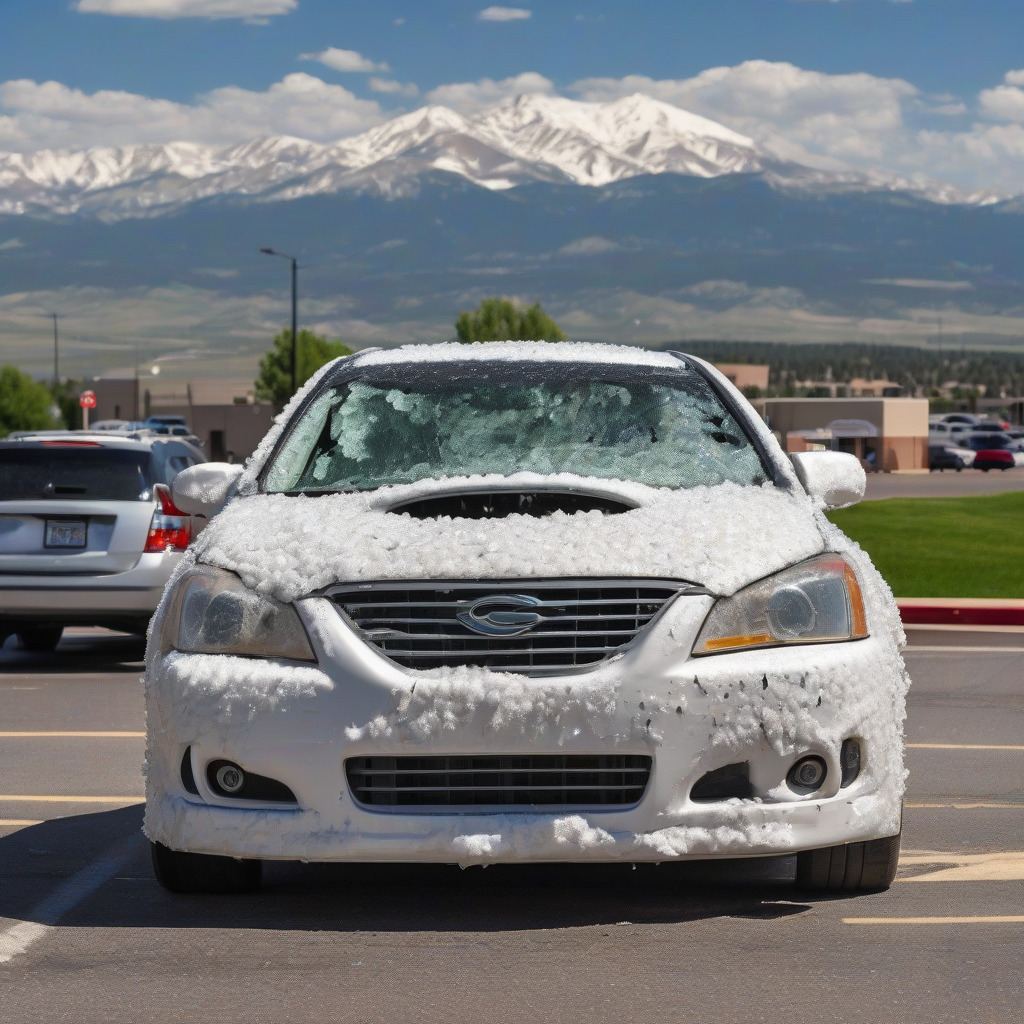
Colorado’s hail season runs May through August, and the Front Range has been hit with notable frequency in recent years. Major events in 2023 and 2024 produced waves of cosmetically damaged inventory — dented roofs, hoods, trunk lids, structurally sound but visually compromised — that cycled through insurance claims and back into the used market at a discount. That discount is real and can be legitimate. The problem is that buyers aren’t always told about the damage. Sometimes they’re not told at all.
Colorado dealer disclosure law requires written disclosure of known material defects before sale. Hail damage documented through an insurance claim will typically appear in a Carfax report under “accident/damage” or “structural damage” designations. Hail damage repaired through paintless dent repair without a claim may not appear at all. A clean Carfax means no claim was filed — not that the vehicle was never hailed on. Buyers learn this distinction the hard way more often than they should.
Ask every seller these questions, and get the answers in writing on the dealer’s letterhead, or noted in the purchase agreement’s remarks section: Has this vehicle sustained hail damage? Has any paintless dent repair been performed? Has an insurance claim been filed for this vehicle?
The inspection that matters most happens in raking light. Overcast afternoon light is ideal. Run your hand across the roof, hood, and trunk feeling for the slight dimpling that PDR reduces but rarely eliminates. An independent mechanic familiar with hail damage patterns is worth the cost on any vehicle you’re seriously considering.
As of early June, Denver-area dealers report they haven’t seen a major influx of hail-damaged inventory from a spring 2026 storm event. Hail season runs through August. If you’re shopping in late summer and a vehicle’s price seems unusually low without obvious explanation, hail history should be your first question. Not your second. Your first.
Used EVs in Denver: A Separate Market With Its Own Math
Denver’s used EV market is mostly two models: the Tesla Model 3 and Model Y together account for the majority of inventory across metro lots. The Chevrolet Bolt EUV has become a legitimate value play in the sub-$20,000 segment — genuinely so, not just “good for an EV.” Smaller volumes of used Nissan Leafs, Hyundai Ioniq 5s, and Ford Mustang Mach-Es exist but supply is limited.
Based on lot visits in June 2026: used Tesla Model 3 (2020–2022 Standard Range) runs $22,000–$27,000 depending on mileage and configuration. Model Y (2021–2023 Long Range AWD) runs $30,000–$38,000, with higher-mileage examples starting to fall into the upper $20s. The Chevrolet Bolt EUV (2022–2023) is the clearest value in the segment at $16,000–$21,000.
Colorado’s state EV incentive structure adds a meaningful layer to this math. The state has offered tax credits on used EV purchases, subject to income and vehicle price thresholds. Verify the current status, dollar amounts, and eligibility requirements directly with the Colorado Energy Office before you shop — not in the finance office after you’ve already fallen for the car. If the used EV credit is active and you qualify, the effective price on a used Bolt EUV could drop enough to substantially reshape the economics of the decision.
Denver proper has growing Level 2 charging network coverage, and Tesla’s Supercharger network along I-70 west handles mountain trips adequately. The used EV argument is strongest for buyers who can charge at home overnight. If you’re in an apartment without dedicated parking and charging access, that’s a genuine obstacle that the sales pitch won’t mention. Be honest with yourself about which situation you’re actually in before you fall in love with a Bolt on a CarMax lot.
Used EV inventory concentrates at CarMax Englewood (which stocks Bolts and Teslas with documented history), franchise locations along Arapahoe Road, and an increasing number of South Broadway independents who’ve started pricing EVs aggressively to move units. Tesla’s own used vehicle operation online is worth checking — its certified used inventory ships to Denver and is priced nationally, which occasionally produces below-market deals on vehicles the company needs to clear from other regions.
What to Do in the Next 60 Days
The question Denver buyers are actually asking: is this a good time to buy, or should I wait for prices to drop further?
Don’t wait. Another significant correction — the kind that would bring Denver transactions back toward $22,000 on a sustained basis — would require a demand shock that isn’t visible anywhere in the current market data. Population growth continues. AWD demand is structural. The factors keeping prices elevated here aren’t temporary. Waiting for a dramatic correction will probably cost more in opportunity than the correction returns in savings.
That said, there’s real money available with tactical shopping over the next 60 days.
Know your segment first. If you need a compact AWD SUV with low miles, you have limited negotiating room and should budget accordingly. If you can buy a sedan or a higher-mileage truck, your leverage is meaningfully better. Don’t let AWD preference override your budget if the use case doesn’t actually require it.
Target the June 30 quarter-end close if you’re reading this in June. Show up to a franchise dealer — Arapahoe Road is the most target-rich environment — in the last week of the month with financing pre-arranged from your credit union or bank. A manager with a quarterly sales target and a customer who can close today has motivation you can use. Most buyers never show up prepared enough to exploit it.
If you miss June, wait until mid-August. The lull between the summer rush and fall inventory turnover is the second-best window. Lots carrying vehicles from April and May will be looking at carrying costs and dealing more aggressively.
Ask four questions in writing before the finance office: What is the complete out-the-door price including all fees? What fees appear beyond state title and registration? Has this vehicle sustained hail damage or received paintless dent repair? What is the vehicle’s registration state history?
Get an independent pre-purchase inspection. Budget $100–$150 for a mechanic who knows the Denver market. Several shops near South Broadway specialize in used vehicle pre-purchase inspections and understand hail damage patterns, Colorado-specific rust considerations, and the mechanical quirks of vehicles that have spent years at altitude. On a $25,000 transaction, this is cheap insurance.
Check the used EV math before you dismiss it. If you can charge at home and your driving fits the range, verify Colorado’s current used EV credit status with the Colorado Energy Office before you shop. The calculations change dramatically once you understand the tax credit picture, and you want to understand it before you’re sitting across from a finance manager.
Know your corridor before you leave the house. Arapahoe Road for CPO and structured transactions. CarMax Englewood for no-haggle, predictable pricing. South Broadway for range and the possibility of a genuine deal. Federal Boulevard for budget buys with higher due-diligence requirements. Thornton and Aurora for trucks and volume.
The Denver used car market in summer 2026 isn’t the crisis it was in 2022. It’s also not the buyer’s market that national headlines imply. It’s a market where someone who shows up with pre-arranged financing, a clear sense of what they actually need, and a willingness to ask uncomfortable questions in writing will consistently outperform someone who wanders onto a lot on a Saturday afternoon and trusts the sticker. In Denver right now, that gap is wider than most buyers expect.
CityDesk Denver reporting for this piece included lot visits to South Broadway, Arapahoe Road/Centennial, and Federal Boulevard corridors in late May and June 2026, and interviews with six Denver-area dealer managers. Prices and inventory conditions reflect June 2026 observations and will change. Verify specific vehicle pricing, dealer fee disclosures, and Colorado EV incentive eligibility directly before purchase.