How to File an Insurance Claim for Hail Damage on Your Car in Colorado
Coverage, adjuster processes, deductible math, and the premium question every Denver driver is asking

Coverage, adjuster processes, deductible math, and the premium question every Denver driver is asking
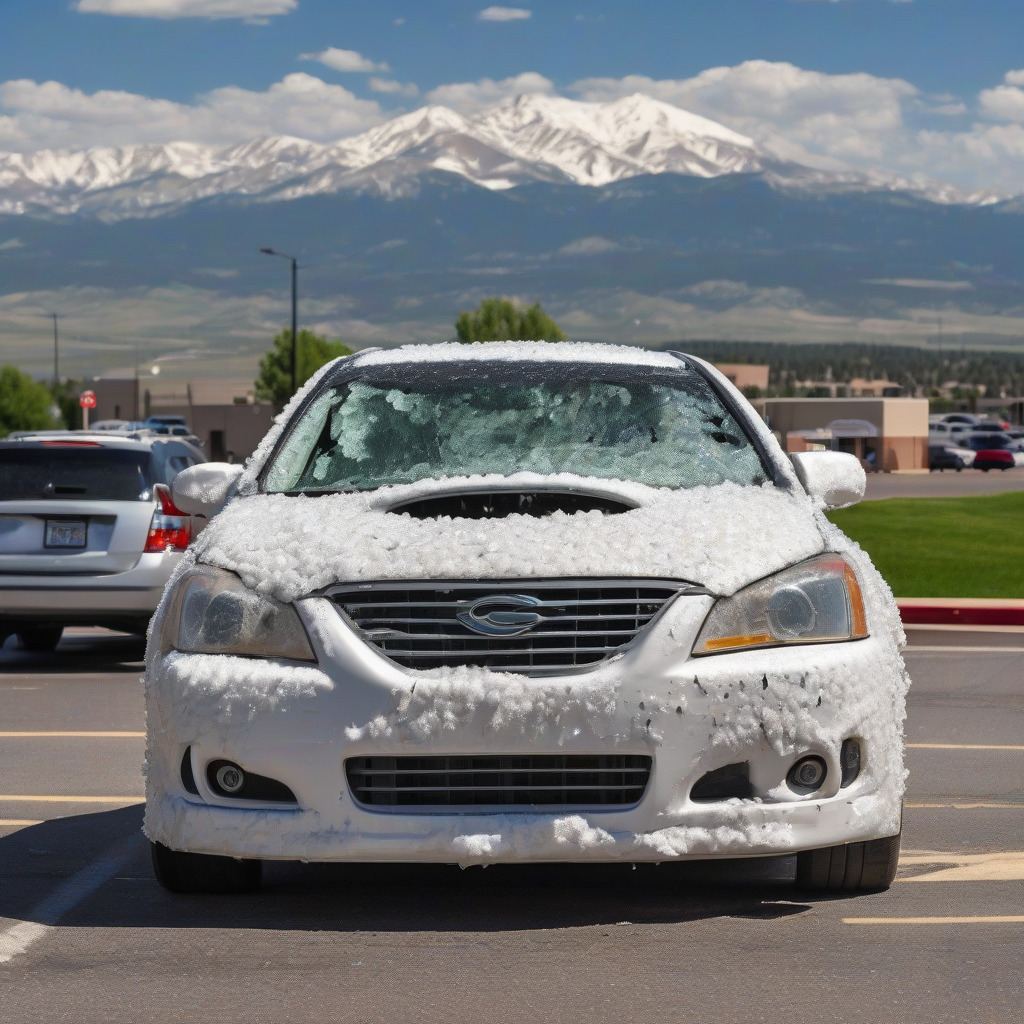
If you walked out after the storm and found a constellation of dents across your hood and roof, you’re in good company. You’re also at the beginning of a process where the decisions you make in the first 48 hours can cost you real money — or save it. This guide walks through every step in order, with actual numbers from the Denver market, the Colorado statutes that protect you, and the math you need to decide whether filing is even worth it.
First, Confirm You’re Actually Covered
This sounds obvious until someone finds out the hard way they’re not. It happens more than you’d think.
Colorado law requires liability insurance. That’s it. Comprehensive coverage — the component that pays for hail, theft, fire, and weather events — is entirely optional, and a meaningful number of Denver drivers don’t carry it. Before you do anything else, pull your declarations page: the summary document your insurer issued when you bought or renewed your policy. Look for the word “Comprehensive” in the coverage schedule and confirm it shows a deductible amount. If it’s listed, you’re covered for hail. If it isn’t, you’re paying out of pocket. No exceptions.
For most drivers, comprehensive deductibles in the Denver market are $500 or $1,000. Write that number down. It becomes the central figure in the math later in this guide.
One thing worth asking your agent before you file: Colorado homeowner policies have increasingly shifted to separate, percentage-based wind/hail deductibles — whether that structure has migrated into any Colorado auto policies is worth confirming with your specific carrier. For the major carriers most Denver drivers use, comprehensive with a flat deductible remains standard. But get the answer in writing.
What Denver’s Hail Season Actually Means for Your Claim Timeline
The Front Range sits in what meteorologists call “Hail Alley” — a corridor from northern Texas through eastern Colorado where atmospheric conditions produce outsized storms with unusual frequency. Denver and its southeastern suburbs average seven to nine hail days per year. The May 2017 storm that cut through the metro generated $2.3 billion in insured losses statewide, still one of the costliest weather events in Colorado history. The August 2023 storm that tracked through the Tech Center and into Greenwood Village was a useful reminder that this isn’t a once-a-decade risk. It’s routine.
After a major storm, Denver-area adjusters run at surge capacity. Inspection waits that normally take a few days can stretch to two or three weeks. Body shop queues — already tight in this market — can push six to eight weeks for conventional repair. PDR specialists book fastest of all. Out-of-state storm-chaser shops flood into the metro after big events, which creates both options and noise.
If you’re in Aurora, Centennial, Parker, or Highlands Ranch, you’re in the part of the metro that sits disproportionately in the primary storm track. You’ll feel this crunch acutely. None of it should discourage you from filing. It should encourage you to move quickly.
Step One: Document Everything Before You Call Anyone
The most important thing you can do immediately after a storm is create a verifiable, date-stamped record of the damage before any repair work begins. This protects you two ways: it establishes the scope of the claim if the adjuster’s estimate later seems low, and it prevents disputes about whether specific damage predates the storm.
Photograph every panel — not just the obvious ones. Hood, roof, trunk lid, and door tops are primary surfaces, but adjusters also examine soft metal trim, antenna bases, roof vents, and the leading edges of hood and fender lips. These low-profile areas are diagnostic: they show hail strike patterns and help adjusters confirm storm severity and direction. Use your phone’s native camera with location and timestamp metadata enabled. Don’t strip that metadata by screenshotting or re-sharing before submission. Timestamps embedded in image files carry more weight than a verbal claim about when photos were taken.
Pull the NOAA Storm Events Database record for your ZIP code. Search by state and county — Denver County, Arapahoe County, Douglas County — and pull the event record matching your storm date. This gives you an official government record of hail size, location, and timing. If you’re filing five or six days after the storm, this record locks your timeline in a way a late call to your insurer simply can’t.
Have your declarations page, VIN, and current odometer reading accessible before you call. And don’t authorize repairs before the adjuster inspects. If a PDR shop approaches you in the parking lot the day after the storm offering to start immediately, decline until your insurer completes its inspection. Premature repair can void or significantly complicate your claim. It seems convenient in the moment. It becomes a headache later.
Step Two: File the Claim and Know Your Legal Protections
Once your documentation is complete, file through your insurer’s app, website, or 1-800 line. The mechanics are straightforward. What most guides omit is the Colorado law governing how your insurer must respond.
Under the Colorado Revised Statutes, insurers must acknowledge receipt of a claim within 10 business days and either pay it, deny it, or provide a written explanation for why resolution requires more time — all within 45 days of receiving complete documentation. If 45 days pass without resolution or a written explanation, you have grounds to file a complaint with the Colorado Division of Insurance at doi.colorado.gov. Most claims don’t come close to that threshold. But knowing the statute puts you in a materially stronger position. Adjusters are aware that policyholders tracking deadlines have recourse.
When you file, reference the NOAA storm event record and give the insurer the precise storm date. If you’re filing several days after the event, note it proactively. It’s not unusual and it’s not disqualifying.
Step Three: Virtual Inspection or In-Person Adjuster?
How your claim gets reviewed depends on your carrier and how straightforward the damage is. State Farm — one of the largest carriers in the Denver metro — uses Xactimate estimating software, the industry standard for generating line-item repair costs. For hail claims without structural damage or broken glass, State Farm offers a virtual, photo-based inspection through its mobile app. The customer photographs the vehicle according to guided prompts, submits images, and a remote adjuster issues an estimate digitally. For straightforward PDR-eligible damage, this can speed things up considerably.
USAA has a concentrated membership in the southeastern Denver metro and along I-25 south through Colorado Springs — which tracks with Buckley Space Force Base in Aurora and Peterson/Schriever in the Springs. USAA runs a comparable app-based process.
One thing most Denver drivers don’t know: Colorado law says you’re not obligated to use your insurer’s preferred repair network. State Farm’s preferred shop partners and USAA’s preferred partners are often convenient, and they offer billing integration that simplifies the claim. But you can take your car to any licensed facility instead. If you have a trusted PDR shop, direct the work there. PDR-only shops book out the fastest after major storms. Call early.
Step Four: PDR or Conventional Repair?
The repair method drives the claim math.
Paintless Dent Repair is the industry standard when paint is intact. Technicians work dents from behind the panel without touching the painted surface — faster and cheaper than bodywork, and when paint is undamaged, produces equivalent results. In the Denver market, PDR for moderate hail damage on a mid-size vehicle typically runs $1,500 to $3,500 depending on panels affected and dent size. Conventional bodywork is required when hail has broken the paint, left deep creases, or damaged areas PDR tools can’t reach. Panel replacement, body filler, and refinishing push costs substantially higher — $3,500 to $8,000 or more on a modern vehicle with extensive damage.
The adjuster’s estimate is generated in Xactimate, priced line by line against current regional labor and materials rates. The estimate isn’t a contractor’s bid. It’s a software-generated calculation — which matters if your shop’s actual costs exceed it, because they sometimes do. Supplements are common and are addressed in the final section.
Post-storm demand in Denver also drives up PDR pricing specifically. Out-of-state specialists follow hail events across the country and come into this market at pricing that reflects both surge demand and the mobile nature of their operations. Get a local shop’s quote alongside any traveling specialist’s offer. It’s worth the extra call.
Step Five: Run the Deductible Math Before You Commit to Filing
Filing a claim is not always the right financial move. The math is simple once you have the numbers.
The insurer pays repair cost minus your deductible. If your PDR estimate is $1,400 and your deductible is $1,000, the insurer pays $400. You absorb $1,000 in deductible costs. You’ve added a claim to your insurance history for a net gain of $400 — before any premium impact. That’s not obviously a good trade.
Local independent agents use a rough rule of thumb: if the repair estimate is less than 1.5 times your deductible, seriously consider paying out of pocket. On a $1,000 deductible, that means estimates under roughly $1,500 probably don’t justify filing. On a $500 deductible, the threshold drops and claims start making sense at lower damage amounts.
The total loss question introduces a separate consideration. Colorado uses its own Total Loss Formula rather than the fixed-percentage threshold many other states apply. If the cost to repair the vehicle exceeds the Actual Cash Value minus salvage value, the car is declared a total loss. For a 10-year-old sedan with an ACV of $8,000 — common in Denver’s commuter suburbs — $5,000 or $6,000 in hail damage can trigger that determination. If you’re driving an older, higher-mileage vehicle and the damage was extensive, run the ACV math with your agent before assuming conventional repair is the path forward. For newer vehicles with significant damage, $4,000 and up in estimated repair, filing makes clear financial sense.
Will Filing a Hail Claim Raise Your Premium in Colorado?
This is what most people actually want to know. The answer is genuinely two-part, and both parts matter.
Colorado law does not prohibit insurers from raising comprehensive rates after a weather claim. There’s no statute protecting you from a rate increase the way some states structure no-fault weather claim protections. That’s the legal baseline.
The practical reality has been different. Major carriers including State Farm and USAA have historically treated hail damage as a non-fault weather event and haven’t applied surcharges for a single claim on an otherwise clean record. For most Denver drivers with those carriers and no prior claim history, one hail claim hasn’t historically produced a rate increase at renewal. But that is carrier practice, not legal protection. It varies by policy tier, claim frequency, and carrier. File two hail claims in three years, and the calculus may look different at renewal. Policies at certain discount tiers can also behave differently.
Before you file, call your agent — not the claims line, your agent. Ask directly: “If I file a comprehensive hail claim, will it affect my premium at renewal under my current policy?” Get a clear answer, and if the agent says it won’t affect your rate, ask them to note it in your account record. An independent agent affiliated with an IIABA Colorado member agency can give you a straight answer, since they’re not on the carrier’s payroll. For additional context on how auto insurance rate decisions work in Colorado, our auto insurance coverage for Denver drivers tracks these carrier practices over time. This call takes five minutes and can save you from a renewal surprise.
After the Claim: Supplements, Rentals, and Disputes
If your policy includes rental reimbursement coverage, both State Farm and USAA have relationships with Enterprise and Hertz that allow rental coordination to begin when your vehicle goes into the shop. Confirm your daily rate limit before the vehicle drops off. Standard limits often fall short of current Denver rental rates, particularly during post-storm periods when rental inventory in the southeast metro tightens. Annoying surprise, easy to avoid with one phone call.
When a shop begins tearing down a vehicle, it frequently finds additional damage that wasn’t visible during surface inspection — a crushed foam backing on a door panel, damaged weather stripping, a bent component under body cladding. Shops submit supplement requests to the insurer for these items. This is normal. Expect it, and confirm with your shop that they’ll handle supplement submission directly with the insurer before work is completed.
If your shop’s repair estimate is meaningfully higher than the Xactimate number, the shop should communicate directly with the adjuster before you’re asked to cover the gap. You shouldn’t automatically absorb the difference between the insurer’s estimate and the shop’s actual costs. If the shop and adjuster can’t resolve it, escalate to the carrier’s claims supervisor.
The Colorado Division of Insurance at doi.colorado.gov handles consumer complaints against carriers operating in the state. If your insurer misses the statutory acknowledgment or resolution timeline without a written explanation, that’s documentable — file there. For contested total loss claims where you believe the ACV calculation is too low, a licensed public adjuster can provide an independent estimate and work on your behalf. They take a commission from the settlement, so there’s no upfront cost. Vet their credentials through the Division of Insurance’s license lookup. The weeks after a major Front Range storm are not a time when the market is short on people claiming expertise.
Editor’s note: Before publication, verify the current CRS § 10-4-642 statutory language at leg.colorado.gov; confirm 2023 storm loss figures with the Insurance Council of the West or NOAA; confirm State Farm’s virtual inspection availability in the Denver metro with State Farm media relations; source USAA claim performance data from J.D. Power and a USAA spokesperson; confirm premium impact practice for hail claims with an IIABA Colorado member agent and with carrier media contacts; and confirm whether any Colorado auto policies currently carry a percentage-based wind/hail deductible separate from standard comprehensive coverage.