How Denver's Mobile Auto Detailing Operators Built a Neighborhood Business
A neighborhood-by-neighborhood guide to what mobile detailing costs, who's doing it, and how to hire someone you can trust.

A neighborhood-by-neighborhood guide to what mobile detailing costs, who’s doing it, and how to hire someone you can trust.
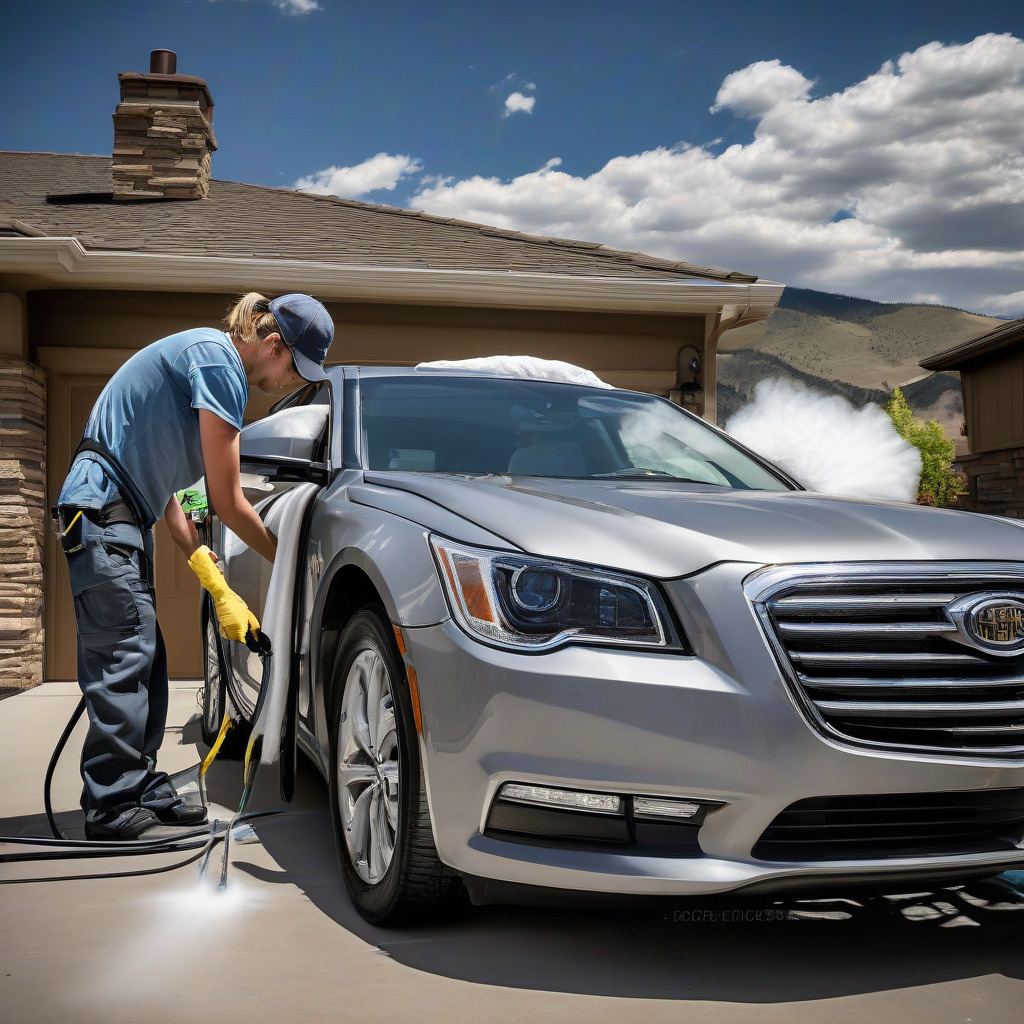
Yes, mobile detailers will come to your home, parking garage, or curb in Denver. They charge roughly $150–$300 for a full interior and exterior detail on a sedan, $200–$400 for an SUV or truck. Those numbers shift based on your neighborhood, your vehicle’s condition, and when you’re calling. What follows is a full accounting of how this market works, who’s in it, and what Denver residents need to know before they book.
Denver Is Genuinely Different Terrain for This Trade
The mobile detailing economy here isn’t just a convenience spin on the national car-wash industry. It exists in this particular form because of four structural conditions that don’t hit Phoenix, Columbus, or Charlotte with anything close to the same force.
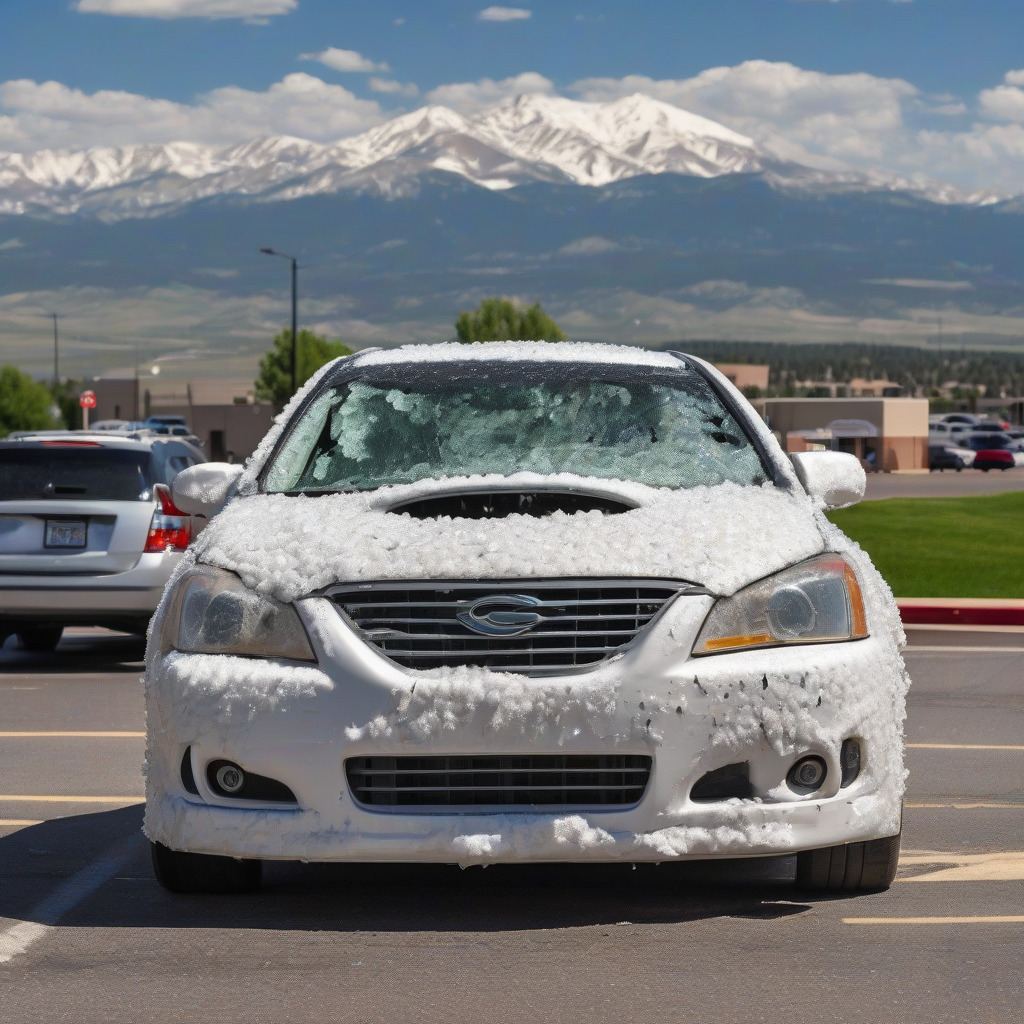
Start with hail. Denver consistently ranks in the top five U.S. cities for hail damage insurance claims, per Insurance Information Institute data. The southeast suburban corridor — Aurora through Centennial and Lone Tree — sits in one of the highest hail-frequency zones in the country. That kind of recurring weather shapes the entire service menu operators build. A detailer working the metro doesn’t treat hail season as a surprise spike. It’s the axis around which their whole operation turns.
Elevation compounds the wear. At 5,280 feet, the atmosphere is thinner and UV radiation measurably more intense than at sea level. Clear-coat and paint oxidize faster here than they would on the same vehicle sitting in Atlanta or Portland. For paint-conscious owners — and Denver has a lot of them, given the truck and outdoor-lifestyle vehicle culture — ceramic coatings and paint sealants aren’t luxury upsells. They’re functional protection against genuinely accelerated degradation.
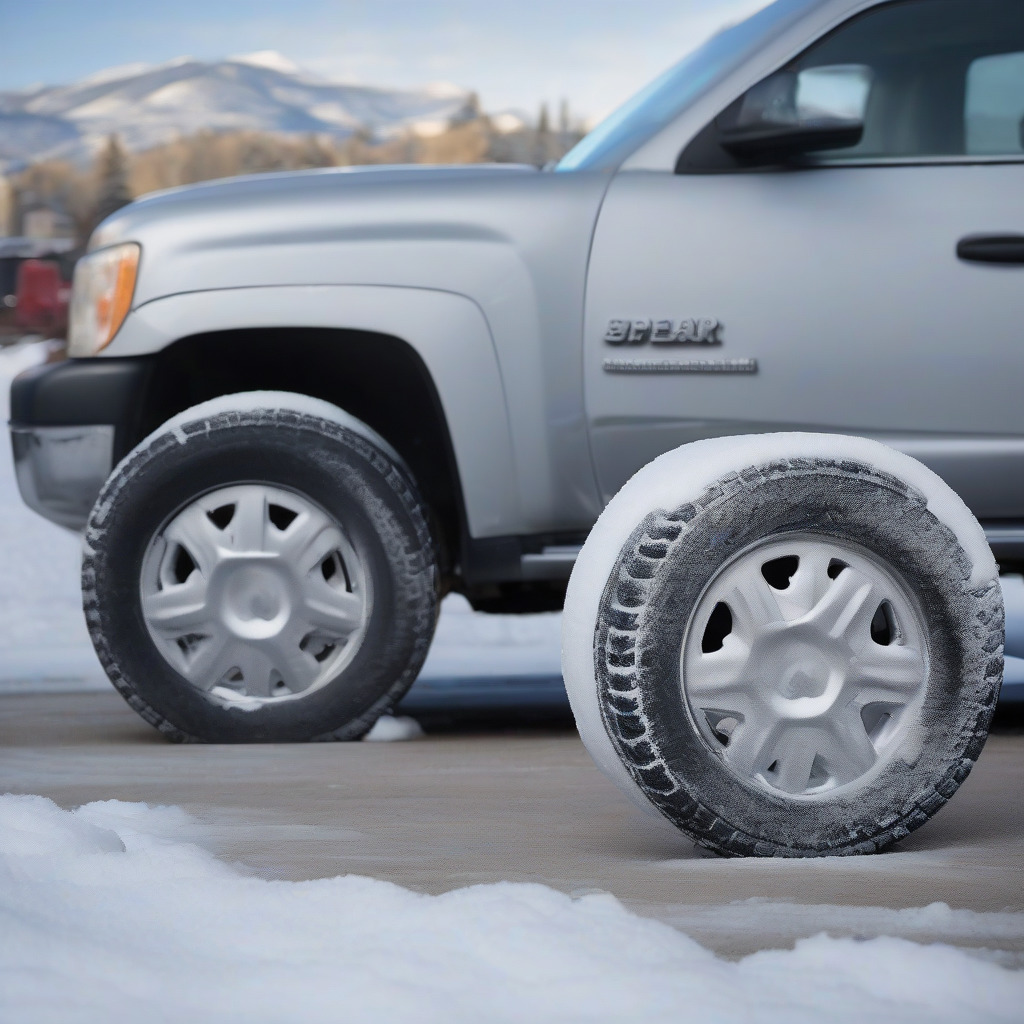
Then there’s CDOT’s winter treatment program. The Colorado Department of Transportation applies magnesium chloride to roads before winter storms. It prevents ice bonding effectively, but it also adheres to undercarriages, wheel wells, and lower body panels in ways ordinary rainfall doesn’t rinse away. Left through a full winter, it works on metal and paint steadily. Denver detailers who specialize in thorough winter work have built a specific service tier around its removal, and given what a Denver winter does to a vehicle’s undercarriage, it’s hard to argue with that call.
Finally: the city’s renter geography. A substantial share of Denver’s population, concentrated in LoDo, RiNo, Capitol Hill, Uptown, and Baker, lives in apartments and condos without driveways or garden hose access. These residents can’t use a traditional car wash the way a homeowner in Littleton with a Saturday afternoon and a driveway can. Self-contained mobile rigs solve a logistics problem the fixed-location model can’t touch. Not complicated — just geography.
The Seasonal Calendar Denver Detailers Actually Work By
Forget four seasons. Working Denver detailers experience the year as a specific sequence of demand spikes and service shifts.
January–February is road-salt and mag chloride season. The busiest work in this window is undercarriage and lower-body decontamination — stripping winter chemical residue before it does lasting damage. Operators who offer full decontamination packages, wheel wells included, tend to be fully booked on dry-weather weekends through February. If you’ve driven Denver streets all winter without addressing this, late February is the window to call, before spring mud season layers on top.
March–April brings mud season, most pronounced in neighborhoods bordering the park system. Washington Park, Platt Park, and Cheesman Park corridors see interior booking tick up as spring runoff turns unpaved edges into paste that ends up in floor mats and wheel arches. If you’ve parked near any of these parks all winter, your floor mats already know.
Late May into June is cottonwood season — which any Denver resident of more than one spring knows, and probably doesn’t love. The sticky fibers bond to wet paint, clog grilles, and leave residue that’s harder to remove than it looks. Ignore it in real time and it sets harder, eventually becoming a more expensive paint-correction problem. Detailers who do thorough decontamination washes pick up significant business in this window for good reason.
June through August is hail surge. Per the Colorado Division of Insurance’s tracking of Front Range storm frequency, this is when operators with post-hail surface prep capabilities see their sharpest demand spikes. Books fill within 24–48 hours after a major storm. Have an operator’s contact information before storm season. Cold-calling in the aftermath and finding everyone booked solid for three weeks is a genuinely frustrating experience that’s entirely avoidable.
September through November is ceramic coating and paint sealant season — residents wanting protection before the next UV-and-freeze cycle tend to book fall. By October, operators who specialize in multi-stage paint correction and coating application are often scheduling weeks out. This is the one to watch. Fall fills faster than most people expect, and if you wait until November you may find their books closed entirely.
On pricing during hail season: customers calling after a major storm may find books full rather than prices inflated. Ask any operator upfront whether they apply a surge or priority surcharge during peak events. Some do. Some don’t. That conversation belongs at booking, not after you’ve driven through a storm and you’re already stressed about your car.
Neighborhood by Neighborhood
Denver’s mobile detailing market isn’t uniform. Different neighborhoods generate different demand, attract different operator types, and present different logistical realities for everyone involved.
Cherry Creek and Glendale are the premium end of the market. The vehicle concentration — Porsche Cayennes, Range Rovers, BMW M variants, AMG Mercs — means operators who specialize in paint correction and ceramic coating have their strongest customer base here. Expect appointment books, not same-week availability. Operators working this corridor tend to carry higher insurance, use professional-grade products, and price accordingly. A ceramic coating job here isn’t a weekend gig. It’s a three-day, multi-stage process with a four-figure price tag.
Highlands, Berkeley, and Sloan’s Lake run on a different model. The northwest neighborhoods have a strong owner-occupier base, which means residents who know and refer their neighbors. Mobile operators who establish themselves here build through word-of-mouth quickly. Streets are practical for curbside work and the vehicle mix — trucks, Subarus, older SUVs alongside newer vehicles — means more full details and maintenance packages than high-end paint correction. Find an operator you like in Highlands and there’s a decent chance they’ve already done three cars on your block.
Stapleton and Central Park have their own wrinkle: HOA restrictions in some Central Park sections govern where commercial vehicles can park or set up to work. Before booking, ask whether the operator has worked in your specific sub-neighborhood and whether they’ve hit access issues. A detailer who’s been working Central Park for two years will know exactly which streets are problems and which aren’t. One who hasn’t will learn on your driveway.
Washington Park and Platt Park operate almost entirely on referral. This is quintessential word-of-mouth territory. Mud-season demand is real — the proximity to the park’s unpaved paths generates interior and exterior work every spring without fail. Residents tend to be loyal once they find someone they trust. A Wash Park operator with a full book probably built it without spending a dime on digital marketing.
LoDo, RiNo, LoHi, and Capitol Hill require a genuinely different operator skillset. Self-contained rigs aren’t a nice-to-have in these neighborhoods — they’re a minimum requirement. Apartment dwellers have no tap to offer and often no dedicated parking spot. Operators working this zone need to know how to set up in a parking garage, negotiate street parking for their rig, and work efficiently without running hoses across a public sidewalk. Not every mobile operator is equipped for this. It’s the first question to ask when booking in these neighborhoods. Operators who do apartment work advertise it specifically because it filters out mismatch calls they don’t want anyway.
Permit-parking zones in Capitol Hill and Baker add friction. If your street is permit-only, your detailer’s vehicle needs to be accounted for — a timed commercial permit, or a neighbor’s driveway. Solve this before booking day, not at 8 a.m. when the operator arrives and can’t legally park for a two-hour job.
Aurora (east metro) has a well-established car-care culture and some of the metro’s most competitive mobile pricing. The southeast Aurora corridor, roughly the E-470 belt through Centennial, also sits in one of the highest hail-frequency zones in Colorado. Operators here tend to be volume-oriented — six to eight jobs per week rather than three to four — which means lower per-job overhead and more accessible pricing. If you’re in Aurora and want a solid full detail without a premium brand experience, this is a strong market.
Littleton, Centennial, and Lone Tree are family-vehicle territory: three-row SUVs, minivans, midsize trucks, statistically high hail exposure. Garages and driveways make logistics clean, which attracts operators who prefer suburban routes over the parking-puzzle neighborhoods of central Denver. A Littleton operator can hit eight jobs on one street without a complicated parking negotiation or HOA question. It’s a genuinely different kind of workday, and operators who prefer it tend to stick around.
What Services Actually Cost in Denver
Mobile detailing costs more than a fixed-location wash. The premium is real.
| Service | Mobile (Denver estimate) | Fixed-Location Comparison |
|---|---|---|
| Exterior waterless or bucket wash | $40–$75 | Not offered at most shops |
| Interior vacuum and wipe-down | $60–$100 | Included in shop packages |
| Full interior and exterior detail | $150–$300 (sedan) / $200–$400 (SUV/truck) | $120–$250 at Cherry Creek Car Wash, Mister Car Wash |
| Paint correction, single-stage | $300–$600+ | Rarely offered mobile; shop-only at most detailers |
| Ceramic coating | $600–$1,500+ | $800–$2,000 at specialty shops |
| Post-hail surface prep | $150–$400 | Not typically offered at wash chains |
The mobile premium for a full detail over a fixed shop is real — $50–$100 on a typical job — but what you’re buying is the operator coming to wherever your vehicle actually sits. For an apartment dweller in Capitol Hill without a car-accessible schedule window, that premium is functionally mandatory. For a homeowner in Littleton with a driveway and no particular time pressure, the math is closer. Driving to a wash and saving $75 is a legitimate choice.
Mister Car Wash runs multiple Denver-area locations and doesn’t offer mobile service. Their model is throughput at fixed locations. These two markets don’t really compete; they serve different needs. Wash chains are genuinely good for routine maintenance washing. Mobile operators are better positioned for interior work, paint decontamination, paint correction, and ceramic coating — anything requiring time, trained judgment, and the flexibility to come to you. If you’re navigating a hail insurance claim alongside this work, our automotive coverage has additional guidance on interacting with insurers and repair shops in Colorado.
All figures here are estimates from market research conducted for this piece. Confirm current pricing directly with any operator before booking. Rates move with fuel costs, product prices, and seasonal demand.
The Post-Hail Question
After a significant hail event, Denver drivers ask some version of: can a mobile detailer help me? Yes — with one clarification that matters before you call.
Mobile detailers handle surface preparation and decontamination after hail. Clay bar treatment removes embedded debris and ice crystals from the paint surface. Decontamination addresses oxidation or residue stirred up by the impact. Documentation photography can support an insurance pre-claim. In some cases, a light paint correction pass addresses surface marring. Done well, this work protects your paint during the often weeks-long wait for PDR and body shop appointments after a major storm.
What mobile detailers cannot do is repair dents or perform paintless dent removal. These are distinct trades requiring distinct equipment and training. A detailer with a steam unit and a clay bar cannot fix the dimpling on your hood. That requires a PDR technician with specialized tools and a proper shop environment. No exceptions, no matter what anyone implies on the phone.
The confusion between these two services is common and leads to frustration on both sides. If you call a mobile detailer after a hailstorm, be explicit: you want surface prep, decontamination, and documentation. Dent repair is a separate call to a separate professional. Understanding how to file an insurance claim for hail damage on your car in Colorado can help you coordinate both trades without losing ground on your claim timeline.
Water, Licensing, and What Denver Renters Should Actually Verify
Professional-grade mobile operators run self-contained rigs — enclosed trailers or purpose-built truck setups — carrying onboard water tanks. They don’t need your tap. This matters for apartment buildings with no outdoor hose bib and during Denver Water conservation restriction periods, which surface intermittently during drought years. If an operator asks to use your outdoor spigot as their primary water source, that tells you something: they’re either brand new or running a part-time setup without the capital investment in a proper rig.
A growing number of Denver operators use waterless or low-water products. Optimum No Rinse is one widely used example, particularly for apartment garage work where drainage logistics complicate wet washing. Steam detailing — minimal water at high pressure — is a third approach. Know which method your operator uses before you book. An operator using waterless products in a parking garage is solving a real problem. An operator insisting on running water in an enclosed structure is creating a drainage mess that building management will eventually shut down.
Denver city and county requires a business license for mobile automotive services. The city’s municipal code doesn’t have a specific “mobile detailing” permit category — operators file under automotive services or a related classification. The question to ask is whether they hold a current Denver business license, not whether they have a “mobile detailing permit” specifically. You can verify current requirements directly with Denver’s Excise & Licenses office. Operators crossing into Arapahoe County (Aurora, Centennial) or Jefferson County (Lakewood, Littleton) may need additional registration. A legitimate operator will have this sorted and won’t be annoyed by the question — they’ve answered it before.
Six Questions Worth Asking Before You Book
These aren’t a generic consumer checklist. They’re specific to Denver conditions.
Are you self-contained for water and power? The answer tells you whether they have a professional rig or a bucket and a borrowed extension cord. For apartment dwellers, “no” is disqualifying. For homeowners who don’t mind sharing a spigot, it’s less critical — but it still signals something about the operator’s investment in the trade.
Do you carry liability insurance, and can you show proof? Denver licensing doesn’t verify insurance as a condition of the business license. Ask directly and ask to see a certificate. Paint correction and ceramic coating involve chemical products on your vehicle’s surfaces. If something goes wrong, you want coverage. Any professional operator produces proof without hesitation.
Are you IDA-certified or affiliated? The International Detailing Association maintains a member locator on its website. Certification isn’t the only quality signal — plenty of skilled operators aren’t formally credentialed — but it indicates training standards and professional accountability. A useful filter, not a hard requirement.
Do you work in parking garages? Not all operators do garage work. Those who do have figured out the drainage, lighting, and ventilation questions that make chemical products safe in enclosed spaces. For residents in LoDo, RiNo, Capitol Hill, and Uptown, this is a non-trivial logistics question. Don’t assume. Ask. If they haven’t done garage work and your only option is a parking structure, this isn’t the right match.
What’s your post-hail service, exactly? This forces the operator to distinguish between surface prep and dent repair. A good operator answers clearly and without hesitation. If the answer implies they can address denting, that’s a flag. A professional knows the edges of their trade.
What’s your water method — wet, waterless, or steam? Beyond the practical implications — HOA restrictions, garage drainage, conservation periods — this question reveals whether the operator actually knows their products. A well-considered answer about why they use a waterless product for garage jobs but full wet wash with deionized water for paint correction tells you something real. A shrug tells you something else entirely.
Finding Operators Worth Talking To
CityDesk Denver wasn’t able to confirm named operators on record in time for this edition. We’re actively pursuing on-record interviews with at least two Denver-area operators — one focused on premium ceramic coating work in the Cherry Creek and Washington Park corridor, one focused on volume residential work in Aurora and Central Park — and will publish operator profiles with confirmed pricing and credentials as a follow-up.
In the meantime: the IDA member locator is a reliable starting point. Google Business Profiles with 50 or more reviews and Denver-specific service area language are a reasonable secondary filter. Nextdoor Denver neighborhood groups and Denver-specific Facebook car-care groups surface operator names with community vetting that aggregator sites can’t replicate. If five people in your neighborhood mention the same operator by name, that’s real signal. Hard to fake.
When you find a candidate, ask the six questions before you book. Don’t rely on reviews alone — reviews tell you what happened after someone paid. The six questions tell you whether the operator understands Denver conditions and has built an operation around them.
Hail Season Timing and Post-Storm Reality
After a significant hail event in metro Denver, detailing operators’ books typically fill within 24–48 hours. Not gouging — real capacity hitting the market at once. Call three weeks after a storm hoping for a surface prep appointment and you may find the entire market booked for three more weeks past that.
The practical fix: if you’re in the Aurora-to-Littleton corridor — the highest-frequency hail zone in Colorado — save an operator’s contact before storm season. Call within hours of a storm and get on the list. Waiting until the dust settles means you’re weeks behind everyone else who thought the same thing. This isn’t panic-booking. It’s how the market actually works in June and July.
Insurance claims for hail damage typically allow several weeks for initial damage assessment, so post-hail surface prep doesn’t have to happen in the first 48 hours. But if you want your choice of operators rather than whoever can fit you in on a Wednesday afternoon three weeks out, having a relationship established before the storm changes the situation entirely.
The Real Advantage of Mobile in Denver
Strip away the convenience framing that shows up in national detailing coverage everywhere and what you’re left with is this: Denver’s mobile detailing market persists because it solves specific, structural problems that fixed-location operators can’t. Apartment dwellers in Capitol Hill can’t easily access a car wash. Residents above 5,000 feet need paint protection that addresses genuinely accelerated oxidation. Colorado’s winter road treatment uses magnesium chloride — not ordinary salt — creating a decontamination task that requires more than a basic wash. Hail season brings demand spikes that fixed-location operators absorb by booking solid for weeks.
The operators who’ve built real businesses here have adapted to all of it: seasonal swings, parking garage logistics, post-storm rush calls, ceramic coating clients who understand exactly why their clear coat needs protection at altitude. The price premium over a fixed wash varies from modest to significant depending on what you’re asking for. For routine maintenance washing, the wash chains are fine. For anything requiring a trained hand, chemical product knowledge, and the flexibility to come to where your car actually lives — the mobile market is where you’re looking.
Ask the six questions, verify licensing and insurance, and book your fall coating work early if you want a slot before the good operators close their books for the year.
CityDesk Denver is continuing to report this story. Operator pricing and on-record profiles will be added upon confirmation. Readers with operator leads or corrections can reach the automotive desk directly.