How Denver's Public Auto Auctions Actually Work and Whether They Are Worth Your Time
Auto auctions look like an obvious shortcut: buy wholesale, skip the dealer markup, drive away ahead. The reality is considerably more complicated. The gap between what people expect and what happe…

Auto auctions look like an obvious shortcut: buy wholesale, skip the dealer markup, drive away ahead. The reality is considerably more complicated. The gap between what people expect and what happens on bid day is wide enough to cost you thousands of dollars — and I’ve watched people figure that out in real time, usually right after they’ve won.
What you need to know before you register, preview, or bid at Manheim Denver, IAA Aurora, or Copart Commerce City.
Who These Auctions Are Actually For, and Whether You Qualify
The most important fact most Denver residents get wrong is the dealer-only versus public-access split. These are not interchangeable options. They operate for entirely different buyers, and showing up at the wrong one without credentials wastes your day. This happens more than you’d think.
Manheim Denver operates in the Henderson/Commerce City corridor off I-76 as a wholesale dealer auction. It is not open to the public. Its business is moving inventory between licensed dealers — rental car companies liquidating fleets, franchised dealerships wholesaling trade-ins, banks disposing of repossessions. To bid, you need an active dealer license from the Colorado Motor Vehicle Dealer Board, or you need to be a credentialed representative of a business that holds one. There is no walk-in public lane. Cox Automotive, Manheim’s parent company, has experimented with consumer-facing channels nationally, but confirm directly with Manheim Denver before making a trip. Absent a specific local program, assume you need a dealer license.
IAA Aurora and Copart Commerce City operate under a completely different model. Both are publicly accessible insurance salvage auctions. Both accept registered members who don’t hold dealer licenses. If you’re a private buyer in the Denver area, these are the facilities you can actually get into.
Where These Places Actually Are
Geography matters because these facilities cluster on Denver’s northeastern edge and it’s easy to conflate them. Manheim sits near Henderson, north of Commerce City, off I-76. IAA’s Aurora facility is near Chambers Road and I-70. Copart’s Commerce City location is close by, back toward the I-76 industrial strip. The two publicly accessible facilities — IAA Aurora and Copart Commerce City — are not far from each other, but they’re both a solid drive from Manheim.
More importantly, they have completely different supply chains. Manheim is dealer-to-dealer wholesale. IAA and Copart are primarily insurance total-loss channels. When an insurer writes off a vehicle as a total loss — hail, flood, collision — it typically transfers ownership to IAA or Copart, which liquidates it through its auction platform. Some inventory comes from other sources: rental companies, donation programs, repossessions. But the dominant supply is insurance salvage, and that has direct legal consequences in Colorado that you need to understand before you bid on anything.
How to Register as a Public Buyer
Neither IAA Aurora nor Copart requires a dealer license for public registration, but neither is frictionless.
At IAA Aurora, public buyers register through IAA.com with a valid government-issued photo ID. The facility charges a refundable security deposit and requires buyers to agree to its membership terms — including accepting responsibility for purchased vehicles and paying all fees within the auction’s payment window. Verify current deposit amounts directly with IAA Aurora before your first visit. Registration gives you access to IAA’s online bidding platform, where most vehicles now sell, plus the ability to attend preview days in person.
Copart’s standard public buyer registration has historically required a refundable deposit of around $400, along with a valid photo ID. The deposit comes back when you close your account, provided you have no outstanding obligations. Verify Colorado-specific deposit and registration requirements at Copart’s Commerce City location before registering. Both facilities update their fee structures periodically and don’t always announce it loudly.
Both platforms have shifted heavily toward online bidding. Most vehicles sell through timed online auctions or live virtual lanes. Convenient, yes — but the trade-off is that your ability to inspect a vehicle depends entirely on whether you show up in person during the preview window. More on that below.
One thing first-time buyers routinely underestimate: public buyers at both IAA and Copart pay a higher buyer fee tier than licensed dealers. This is structural, not negotiable. Budget for it explicitly before you calculate whether any specific purchase makes financial sense.
The Full Cost of Winning a Bid
The hammer price is not the price you pay. This is where most auction guides fail their readers.
At IAA Aurora and Copart, the fees stacked on top of a winning bid are substantial, tiered by final bid price, and frequently surprising to first-time buyers. A vehicle that hammers at $3,500 might cost a public buyer the $3,500 plus roughly $275 in buyer fees, plus gate or storage fees if the vehicle isn’t picked up immediately, plus title processing fees. You’re realistically looking at $3,900-plus before tax and transportation. Get the current fee schedule from IAA Aurora before you bid. IAA publishes its buyer fee tables on IAA.com, broken down by buyer tier and bid range. Print it. Bring it to preview.
Colorado doesn’t collect sales tax at the auction. You pay state and local sales tax when you register at the DMV — which can feel like a second bill arriving a month later if you haven’t planned for it. It’s not optional. Factor it into your total-cost calculation before you bid, not after.
Copart’s fee structure follows a similar tiered model with public buyer surcharges. The number that matters is not the hammer price. It’s the total amount you will actually pay to own the vehicle — hammer price plus all fees plus tax plus transport. Run that number before you bid. Every time.
What You Can and Cannot Inspect
You cannot test drive a vehicle at IAA Aurora or Copart. You cannot put it on a lift. You cannot arrange a cold start in most cases. These are the core inspection limitations of the insurance salvage model, and they’re not going to change.
What you can do — and should do aggressively — is use the preview window. IAA Aurora typically holds preview on the business day before the sale, often 8am to 4pm, though exact hours vary by sale date. Verify preview hours for your specific sale directly with IAA Aurora before you go. Copart offers similar access.
At preview, perform a full visual inspection. Check panel gaps. Look at the undercarriage for frame damage. Inspect the floor pans for rust — this matters more in Denver than national guides acknowledge, because road salt and freeze-thaw cycles accelerate corrosion on floor pans, subframes, and brake lines. Check fluid levels and the engine bay. If the vehicle has a battery and will power on, plug in an OBD-II scanner and pull trouble codes. Bring one from any auto parts store. Bring a flashlight. Have Carfax or AutoCheck pulled up on the VIN before you walk up.
IAA’s condition reports document damage categories and start/run status and are useful as a starting reference. They’re not produced by an independent inspector. For online bidders who never physically see a vehicle, the risk of a condition surprise is meaningfully higher — which is why attending preview in person is worth your time if you’re seriously considering a bid.
The Hail Problem, Which Most Guides Don’t Bother Explaining
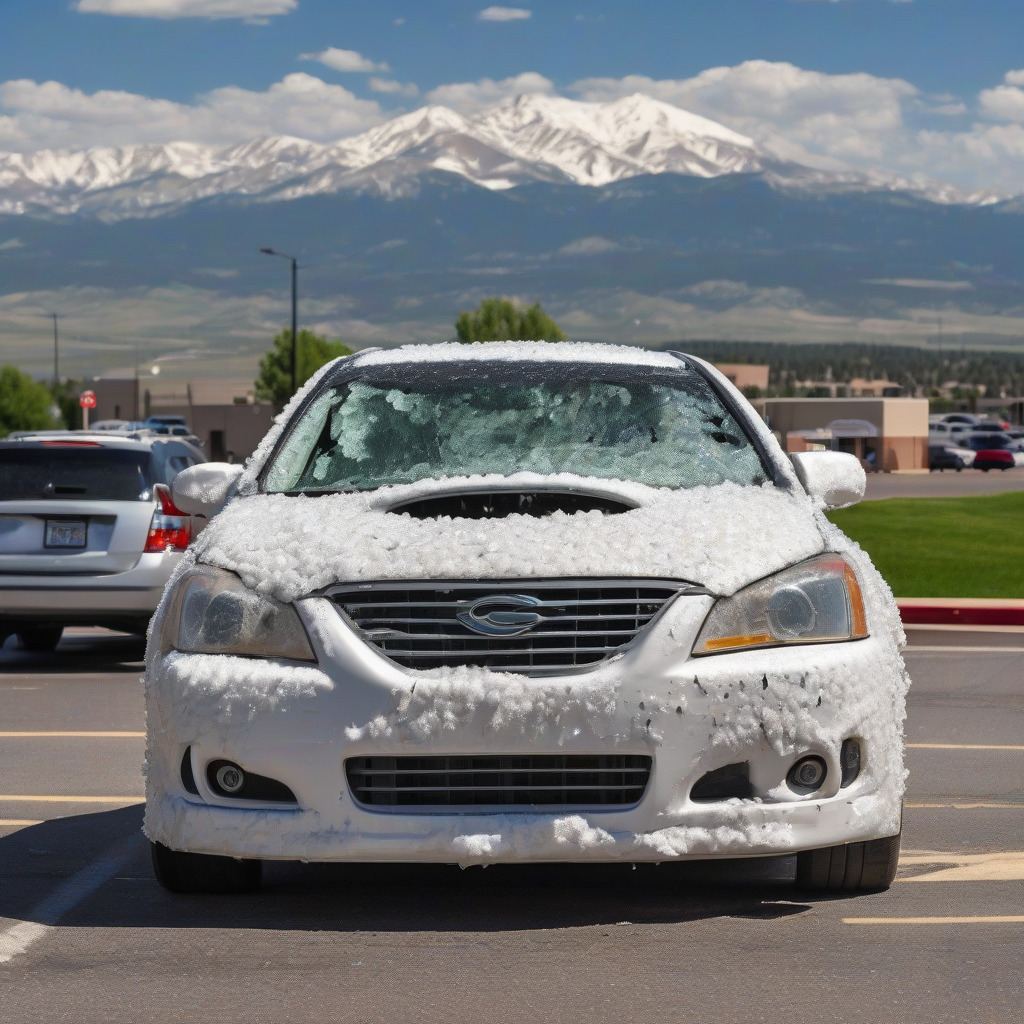
Any Denver-area auction guide that skips hail is incomplete. IAA Aurora’s summer inventory — following the Front Range’s peak hail season — regularly includes a significant volume of hail-damaged vehicles. Anyone who’s watched a spring storm roll across the plains toward Denver knows how fast this inventory accumulates. The title implications vary, and they matter before you bid.
When an insurer writes off a hailed vehicle as a total loss, the car gets a salvage brand and cannot be legally driven on Colorado roads until it passes a state salvage inspection and receives a Rebuilt title. That process takes time, costs money, and has regulatory friction you need to plan for.
But not every hail-damaged vehicle at auction carries a salvage title. If repair costs fell below the total-loss threshold, or if the owner accepted a partial cash settlement and retained the car, it may come to market with a clean title despite obvious body damage. This is a legitimate category for cosmetically indifferent buyers. A clean-title hail car with dents across the hood and roof that runs and drives normally can represent real value — the cosmetic damage discounts the price without triggering salvage inspection requirements or the downstream insurance and financing consequences. You can insure it normally, finance it, and resell it without salvage disclosure. That’s a meaningful distinction, not a minor one.
Check the title status explicitly before you bid on any hail car at IAA Aurora. It’s listed in the vehicle details. “Salvage” and “Certificate of Title” are not equivalent. One requires a state inspection before it can be plated. The other doesn’t.
Colorado’s Salvage Title Process After You Win
If you buy a salvage-branded vehicle at IAA Aurora or Copart, you’re entering a specific Colorado regulatory process before that vehicle can be plated and driven on public roads.
The vehicle must be repaired to roadworthy condition, then inspected by the Colorado State Patrol through its salvage inspection program. The inspection covers structural integrity, VIN verification, and identification of major components. Current inspection fees run in the $50 to $75 range — confirm current figures with CSP before scheduling. CSP facilities in the Denver metro have carried backlogs at various points. Don’t assume you can schedule an inspection the week after you win the bid. Build realistic lead time into your planning.
If the vehicle passes, Colorado DMV issues a Rebuilt title. That designation is permanent. It must be disclosed in any future sale and stays on the vehicle’s history regardless of how many subsequent owners it passes through. Until the inspection clears and the Rebuilt title is issued, you cannot legally drive the vehicle on Colorado roads. Transport it by flatbed.
What a Rebuilt Title Does to Insurance, Financing, and Resale
The Rebuilt designation has consequences that will directly affect what you can do with the vehicle.
Many Colorado insurers decline to write comprehensive and collision coverage on Rebuilt-title vehicles, or offer it only at substantially higher premiums. Liability-only coverage is generally available. But if you plan to insure the vehicle for its actual value against theft or damage, call your insurer with the specific VIN before you bid. Not a general question about rebuilt titles — the actual VIN. This is probably the most common post-purchase surprise I’d warn first-time auction buyers about. You win the bid, you do the paperwork, and then you find out you can’t get the coverage you expected.
Most traditional lenders won’t write loans against Rebuilt-title vehicles. Specialized lenders will, at higher rates and lower loan-to-value ratios. In practical terms, buying a salvage vehicle at auction in Colorado is a cash purchase for most buyers. If you’re relying on conventional financing, this category is effectively closed to you.
The Rebuilt designation also creates a permanent structural discount against comparable clean-title vehicles in resale. The gap varies by vehicle type and market, but it’s real and it doesn’t go away. Factor a realistic resale estimate into your math when calculating whether the auction price plus repair plus fees actually beats buying something with a clean title in the first place.
Does Buying at Auction Actually Save Money
Sometimes, for the right buyer, on the right vehicle. It’s not automatically cheaper than buying retail, and the cost advantage is smaller than most people assume when they first walk into a preview.
Denver’s used-car market is competitive. Wholesale-to-retail spreads exist, and dealers do mark up auction inventory for retail sale. But those spreads don’t account for what a private buyer absorbs that a dealer doesn’t: professional reconditioning, warranty backstop, title processing infrastructure, and the ability to absorb an occasional bad unit without a personal financial crisis. Dealers also buy at volume and get better fee terms than public buyers receive. You are not operating on equal footing, and it’s worth being clear-eyed about that rather than assuming you’ve found a loophole.
Run the real math on any specific vehicle. Hammer price, plus buyer fees from the current fee schedule at your buyer tier, plus towing if the vehicle is non-running, plus repair costs, plus CSP inspection if it’s a salvage vehicle, plus sales tax at DMV. Compare that total to retail pricing for comparable vehicles on CarGurus or local dealer lots, adjusting for the clean-versus-rebuilt-title difference in resale value.
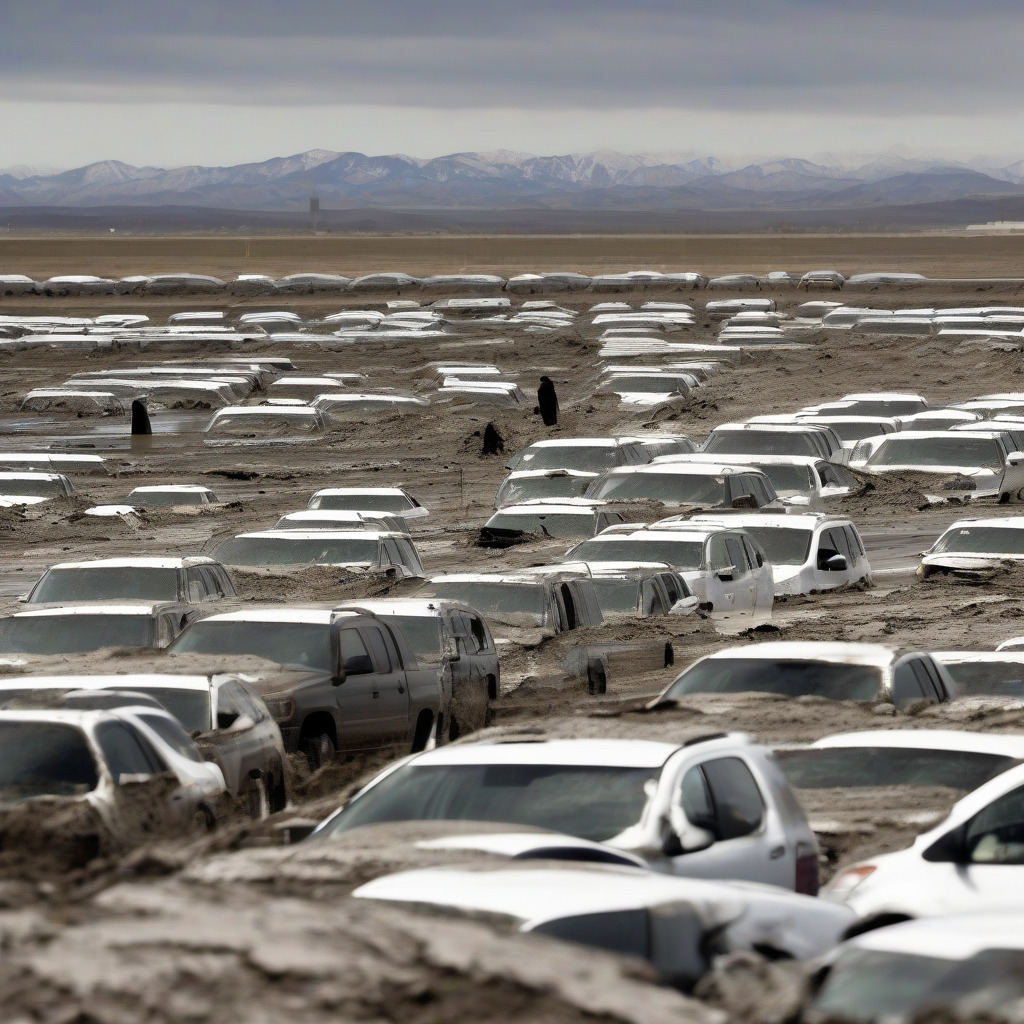
The vehicles where auction buying makes the clearest sense for private buyers are clean-title vehicles with cosmetic damage that a buyer can live with or repair cheaply — hail dents on a mechanically sound car, a bumper cover replacement, minor collision damage on a single panel. The vehicles where the math gets murky fast are non-running vehicles, flood-damaged vehicles (where hidden electrical and structural damage routinely exceeds what’s visible — I find this category genuinely treacherous and would avoid it without a professional mechanical assessment), and high-mileage vehicles with unknown service history where one hidden mechanical problem erases the apparent price advantage.
One Denver-specific complication: if you win a non-running vehicle at IAA Aurora in January and need flatbed transport in icy conditions, it costs more, takes longer, and introduces real logistical friction. Factor that in.
Before You Bid: What Prepared Buyers Actually Do
Register before the sale day. Neither IAA nor Copart allows same-day public registration at the facility. Complete your online registration and deposit before the sale date.
Pull VIN history before preview, not after. A Carfax or AutoCheck report runs roughly $40 for a single vehicle. It surfaces accident history, odometer discrepancies, and whether a vehicle has been previously branded salvage in another state. This step has prevented a lot of expensive mistakes.
Attend preview in person if at all possible. Online condition reports are a starting point. Bring a flashlight, an OBD-II scanner, and your VIN report.
Check title status explicitly on every vehicle you consider bidding on. Salvage and clean-title hail cars look nearly identical in photos. The title status is in the listing details.
Inspect floor pans and undercarriage. Front Range road salt and freeze-thaw cycles create rust problems on floor pans, subframes, and brake lines that national guides routinely skip. If the vehicle is going to spend winters in Colorado, this matters more than it would in Phoenix.
Get an insurance quote on the specific VIN before you bid. Call your insurer with the VIN and ask what full coverage would cost and whether they write it at all.
Arrange transport before bid day. If you win a non-running or salvage vehicle, you need a flatbed. Line up a tow company in advance.
Apply the actual current fee schedule to your target bid price before bidding. Get the fee schedule from IAA.com or Copart.com for your buyer tier. Do not wait until after a win to calculate total cost.
Know Colorado’s 60-day title transfer deadline. Colorado requires title transfer within 60 days of purchase. If your vehicle is going through the salvage inspection process, make sure the timeline works before you commit.
For salvage vehicles: contact Colorado State Patrol about current inspection scheduling and wait times before you bid. A long backlog can affect your 60-day transfer window and your ability to put the vehicle in service on any timeline that makes sense.
For buyers who do the homework — pull the VIN, attend preview, run the full cost math, understand what a Rebuilt title means for insurance and resale — there are real deals at IAA Aurora and Copart Commerce City, particularly in the automotive coverage we’ve done on Denver’s used-vehicle market and the clean-title hail inventory that accumulates every summer. For buyers who treat the hammer price as the purchase price and figure out the rest afterward, the savings are much less certain than they looked from the outside.
Buyer fee schedules, deposit requirements, and registration policies at IAA Aurora and Copart Commerce City change periodically. Verify current figures directly with each facility before registering or bidding. Colorado salvage inspection fees and scheduling should be confirmed with Colorado State Patrol before you commit to a salvage vehicle purchase.