What Actually Happens to Your Body When You Move to Denver and How Long Before It Feels Normal
June is peak relocation month in Denver. Here's what the physiology and clinical guidance from local institutions actually tell new patients — not what travel blogs say.

June is peak relocation month in Denver. Here’s what the physiology and clinical guidance from local institutions actually tell new patients — not what travel blogs say.
If you just signed a lease in Capitol Hill or LoHi and flew in from Houston, here’s the most useful thing to know before you unpack: the altitude will affect you, and for longer than you expect. Not in a dramatic, emergency-room way for most people — in a persistent, grinding way that reshapes your energy, your sleep, your athletic performance, and your tolerance for a second beer. Your body knows what to do about it. The problem is that the process takes months, not days.
This is not a weekend travel guide. It’s a clinically grounded orientation for people who just moved here permanently, or at least long enough to need a Colorado driver’s license.
Why Denver’s Altitude Is a Different Problem Than a Mountain Vacation
Denver sits at 5,280 feet above sea level. That number appears on the state quarter and on the seat behind home plate at Coors Field, but its physiological meaning is specific: at that elevation, atmospheric pressure runs around 630 mmHg, compared to 760 mmHg at sea level. The fraction of air that is oxygen stays constant at roughly 21%, but with less atmosphere pressing down, each breath delivers about 17% less oxygen to your lungs than the same breath at sea level.
Your blood oxygen saturation — the SpO2 number pulse oximeters measure — runs routinely between 92 and 95% in healthy Denver adults, compared to 97-99% at sea level. You are not sick. You are operating in a lower-oxygen environment than your body evolved to treat as baseline.
The distinction matters for someone who just signed a lease. A visitor who feels terrible on a Friday in Breckenridge is home by Monday, no adaptation required. You need your cardiovascular system to structurally reorganize itself so that 630 mmHg becomes your new normal. That process — genuine hematological acclimatization — takes months, and willpower, water, and supplements cannot shortcut it. I know that’s not what anyone wants to hear two days after moving across the country, but there it is.
If your lease is in Evergreen at 7,000 feet or Conifer at 8,000, add substantially to every timeline here. The physiological burden climbs steeply above 8,000 feet, and the body’s response at those elevations is clinically distinct from Denver proper.
The Three-Phase Biology of What’s Happening
The adaptation unfolds in three overlapping phases. Understanding them tells you what’s normal, what the timeline looks like, and why you might feel worse on day three than you did on day one.
Hours 0 to 72: The Immediate Ventilatory Response
Within hours of arriving, your body detects the drop in blood oxygen and compensates through the fastest tool it has: breathing faster and deeper. Your brainstem triggers the hypoxic ventilatory response automatically. You don’t choose to hyperventilate. The immediate effect is slightly elevated blood pH from excess carbon dioxide being exhaled, which signals your kidneys to begin secreting bicarbonate to rebalance your blood chemistry.
Days two and three are often the worst — which surprises almost everyone. The ventilatory compensation is incomplete, the bicarbonate correction is still in progress, and sleep repeatedly drops SpO2 lower than your waking level because breathing naturally slows at night. Most new arrivals report the worst headache and fatigue around day two or three, not day one when the adrenaline of moving is still running.
Days 7 to 14: Plasma Shifts and the First Hormonal Response
Your plasma volume contracts over the first week or two. Blood becomes more concentrated, transiently increasing the proportion of red blood cells carrying oxygen without actually creating new ones. Your kidneys also begin ramping up erythropoietin (EPO) — the hormone that signals your bone marrow to manufacture additional red blood cells. By the end of week two, most people’s ventilatory adaptation is largely complete; they stop noticing the need to breathe harder on flat ground. Sleep disruption begins to ease. Energy starts to feel more recognizable.
Weeks Four Through Several Months: Hemoglobin Mass Increases
This is the phase that takes longest and matters most. Red blood cell mass and hemoglobin concentration gradually increase over many weeks, driven by the sustained EPO stimulus. It’s the same adaptation that altitude-training camps in Colorado Springs deliberately exploit for competitive performance — it just happens to you whether you asked for it or not. Full hematological acclimatization, measured by hemoglobin mass, can take three to six months for people arriving from low-elevation cities like Houston or Miami, where baseline red blood cell mass is lower.
You’ll feel functionally normal for daily life within two to three weeks. Your blood will still be rebuilding for months after that.
A Symptom Decision Ladder: Normal, Watch Closely, Go Now
Frontal headaches — the forehead-and-temples variety — are the most common symptom of altitude adjustment and don’t indicate anything is wrong. Fatigue disproportionate to activity, mild nausea in the first few days, disrupted sleep, vivid dreams, and increased urination (the bicarbonate correction at work) are all normal in the first week. Symptoms are generally worst at days two and three and improve substantially by days five through seven. Ibuprofen works well for altitude headache at standard doses. Staying hydrated and cutting exercise intensity is the complete self-treatment protocol — not glamorous, but that’s genuinely it.
If your headache isn’t responding to ibuprofen and hydration after day five, or if it’s worsening past day seven, pay attention. Persistent vomiting beyond the first three days and swelling in your face or hands are signs to contact a physician rather than waiting. The Lake Louise AMS Score is a validated self-report tool clinicians use to quantify symptom severity; a score of three or higher suggests Acute Mountain Sickness. You can self-administer it online and it’s a reasonable triage tool for deciding whether to call a doctor.
Ataxia, confusion, chest tightness at rest, a cough producing pink or frothy sputum, and vision changes all require emergency evaluation. Pink or frothy sputum specifically indicates High Altitude Pulmonary Edema — fluid accumulation in the lungs — which is rare at 5,280 feet but not impossible, particularly in people with underlying cardiopulmonary conditions or those who overexerted heavily in the first 48 hours. Don’t go to urgent care with these symptoms. Go to an emergency department. UCHealth University of Colorado Hospital and Denver Health Medical Center are both full-service options.
For symptoms that are worsening past day five but don’t rise to emergency level, Denver Health urgent care is appropriate. Their clinical staff see altitude presentations regularly. For guidance on finding a primary care provider, our coverage of Denver health systems accepting new patients is worth bookmarking before you need it.
Being Fit Won’t Protect You the Way You Think
Cardiovascular fitness does not predict how your body responds to altitude. The primary determinant is your hypoxic ventilatory response — the genetic variation in how aggressively your brainstem signals your lungs to compensate for low oxygen. People with a strong HVR adapt faster and suffer fewer symptoms. People with a blunted HVR struggle more, even if they’re highly trained athletes. There’s no training you can do to change your HVR before you arrive.
Sports medicine literature documents this repeatedly: highly trained athletes have presented with significant AMS while sedentary transplants coasted through the first week without a headache. Fitness correlates with altitude performance over time. It does not predict who suffers at the outset.
Two populations face elevated risk. People with diagnosed obstructive sleep apnea: nocturnal oxygen desaturation — already a feature of untreated or undertreated sleep apnea — worsens at altitude. If you use a CPAP and you’re relocating to Denver, talk to your physician about pressure adjustments before you arrive. And people with cardiovascular or chronic pulmonary conditions — heart failure, COPD, pulmonary hypertension — face a different risk profile at altitude than healthy adults and need individualized guidance before the move.
Your Athletic Performance at 5,280 Feet
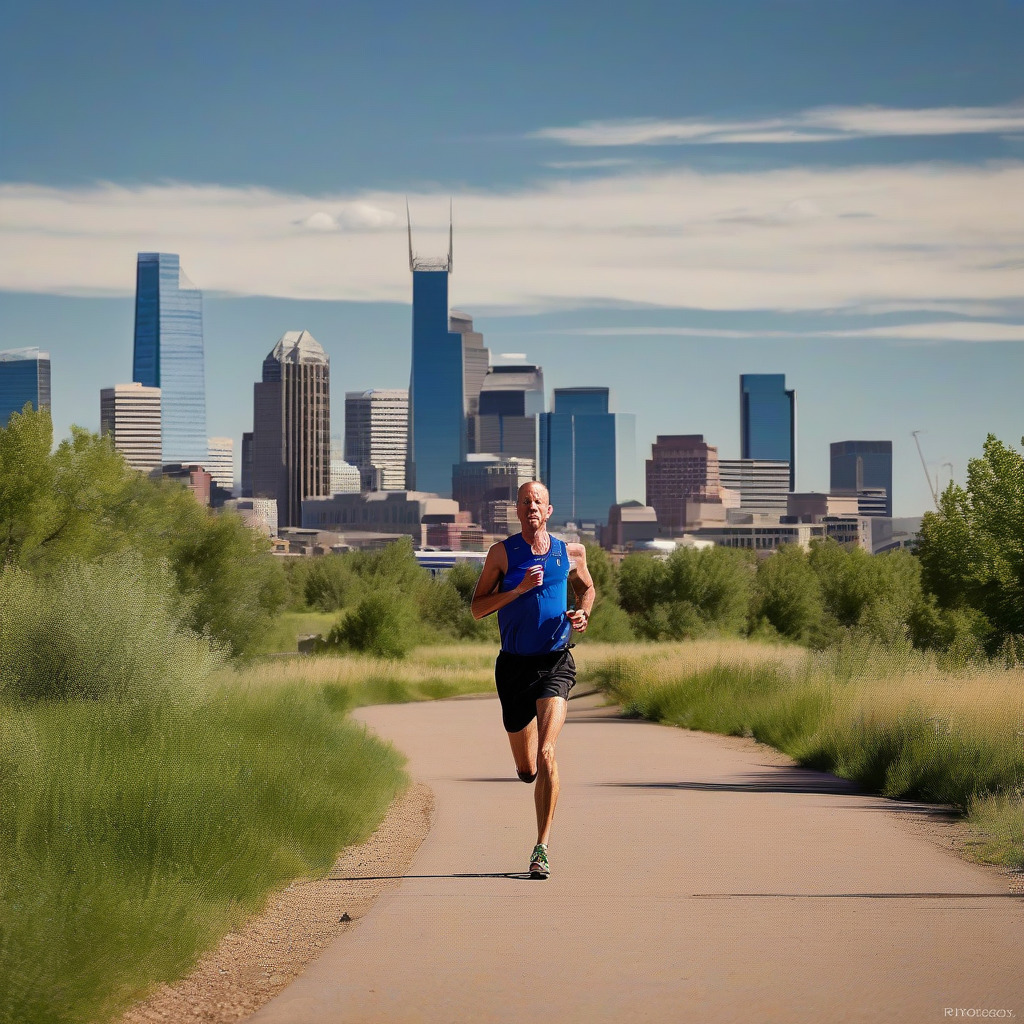
At Denver’s elevation, VO2 max — your maximum aerobic capacity — drops roughly 6 to 8% compared to sea level. If you’ve ever raced a half marathon at altitude after training at sea level, you already know what that feels like in practice: it feels like considerably more than 6 to 8%.
VO2 max suppression doesn’t fully resolve until hematological adaptation is well underway — months, not weeks, for competitive athletes managing specific pace or power targets. The payoff is real, eventually. Sustained altitude residency produces measurable performance advantages. Higher hemoglobin mass improves oxygen-carrying capacity, and Denver residents who train consistently often see improved performance at lower elevations. That’s the same physiology that sends elite runners to Colorado Springs. You’re getting a version of it whether you signed up for it or not.
If you have a race on the calendar within three months of your move date, UCHealth Sports Medicine — with clinics at Stapleton/Central Park, Cherry Creek, and Highlands Ranch — regularly works with athletes relocating to Denver and can build you an individualized return-to-intensity plan. Worth the scheduling effort if your training has a deadline.
What the Evidence Actually Supports
The internet produces confident, contradictory altitude advice. Here’s a hierarchy of what actually matters, and more context is available throughout our health & wellness coverage for Denver-specific physical and environmental factors.
Graduated exertion is the most effective intervention and the most ignored. Cut your exercise intensity for the first two weeks. It’s not weakness — it reduces AMS risk and lets adaptation proceed without overwhelming cardiovascular demand. Most new arrivals skip this step and feel it.
Sleep is when adaptation consolidates. The first week of disrupted sleep is part of the process, not a problem to solve. Keep your sleep environment dark and cool, and cut evening alcohol — more on that below. The disruption resolves as ventilatory adaptation completes, usually by the end of week two.
Hydration matters because you’re losing more respiratory water at altitude than you’re used to. Use urine color as your gauge: pale yellow is correct. Dark yellow means you’re behind. Clear means you’ve overcorrected. Drink to that target, not to some arbitrary gallon-a-day figure someone posted on Reddit.
If you’re vegetarian, vegan, or have a history of iron-deficiency anemia, discuss your iron status with a physician. EPO-driven red blood cell production requires adequate iron, and the demands of adaptation increase that requirement.
Acetazolamide (Diamox) is a prescription medication that accelerates the bicarbonate correction that normally takes days, effectively fast-tracking the earliest phase of adaptation. It’s FDA-approved for altitude sickness prophylaxis, with typical prophylactic dosing starting 24 hours before arrival. Denver PCPs do prescribe it, though practice varies. It’s most commonly used for travel above 8,000 feet rather than Denver proper — worth asking about if you’re particularly concerned or arriving for an event rather than settling in.
Oxygen bars — Denver has several around Cherry Creek — provide temporary relief from headache or fatigue. They produce no lasting physiological benefit and don’t accelerate acclimatization. The moment you stop, you return to ambient Denver air. They’re expensive comfort. Worth knowing before you spend $30 on a fifteen-minute session on day two.
Denver-Specific Factors That Compound the Adjustment
Beyond the elevation itself, Denver’s environment adds stressors most transplants don’t anticipate.
Average relative humidity runs between 35 and 50% in warmer months and drops lower in winter once indoor heating runs constantly. At altitude, your respiratory rate is already elevated, meaning you’re pushing more air through your nasal passages and lungs per hour than you were at sea level. The resulting dryness — cracked lips, dry nasal passages, a persistent scratchy throat — isn’t illness. It’s fluid loss, and it’s continuous.
At 5,280 feet, Denver’s UV index runs roughly 25% higher than cities at the same latitude at sea level. This is relevant not only for sunburn risk but because UV exposure compounds fatigue — particularly for people arriving in June, July, or August who are spending time outside while simultaneously adjusting. Treat SPF protection as non-negotiable if you’re exercising outdoors or working in an exposed environment. For those managing outdoor workouts during Denver’s ozone season, the Denver ozone season outdoor exercise guide covers air quality considerations that stack on top of altitude adjustment.
Then there’s alcohol. At elevation, alcohol suppresses the hypoxic ventilatory response more aggressively than at sea level, meaning you’re breathing less effectively at exactly the moment your body most needs oxygen. It’s also a diuretic and it wrecks sleep architecture. Denver has more than 100 breweries, and new residents consistently underestimate what altitude does to alcohol’s effects. Two drinks in Denver during your first month will feel more like three. The morning after will feel worse than you expect. Plan accordingly.
Red Rocks Amphitheatre sits at 6,280 feet — a thousand feet above Denver. June through August, the show schedule is relentless, and new residents show up in week one and treat it like sea level. Arrive early. Walk slowly. Stay ahead of hydration. Recalibrate your alcohol intake. A brisk climb to your seats after a beer in the parking lot is a genuine AMS trigger for someone in week one. It’s a spectacular venue. It will wreck you if you’re not paying attention.
When to See a Doctor and Who to Call
UCHealth Sports Medicine at Stapleton/Central Park, Cherry Creek, or Highlands Ranch is the right call for competitive and recreational athletes with a performance goal on the calendar. They see Denver transplants regularly and offer evidence-based return-to-intensity plans.
National Jewish Health at 1400 Jackson Street is one of the country’s premier respiratory medicine institutions. If you have asthma, COPD, a history of pulmonary issues, or sleep apnea and you’re concerned about your adjustment, this is the appropriate destination — not a general urgent care.
For routine altitude-adjustment concerns or questions about acetazolamide, establishing with a Denver primary care provider early is worth prioritizing. Wait times at popular practices can stretch to several weeks. UCHealth telehealth can bridge the gap for non-urgent issues while you wait.
Denver Health urgent care handles altitude-related symptoms that are worsening past day five or include persistent vomiting or swelling. Their providers are experienced with altitude presentations. For ataxia, confusion, chest tightness at rest, pink or frothy sputum, or vision changes, skip urgent care entirely. Go to an emergency department. HAPE and High Altitude Cerebral Edema — while rare at Denver’s elevation — require diagnostic and treatment resources urgent care facilities aren’t equipped to provide.
Denver in June is a city of moving trucks and new residents who’ve heard the altitude is “not that bad compared to the mountains.” They’re right that it’s not Leadville. They’re wrong that it’s nothing. For the first ninety days, your body is doing real, sustained work — work that temporarily cuts your athletic performance, disrupts your sleep, raises your susceptibility to dehydration and sunburn, and changes how you handle a beer after dinner. Most of it is normal. Almost all of it resolves.
A year from now, when the adaptation is complete, you’ll be running at an elevation that would stop the version of you from your old city cold. The work is worth it. But it is work, and it takes the time it takes.