Denver's Short-Term Rental Rules Explained for Airbnb Hosts in 2026
The single most important fact about short-term rental licensing in Denver is one most competitor guides bury past the fold: if you don't live there, you can't legally rent it. Denver issues short-…

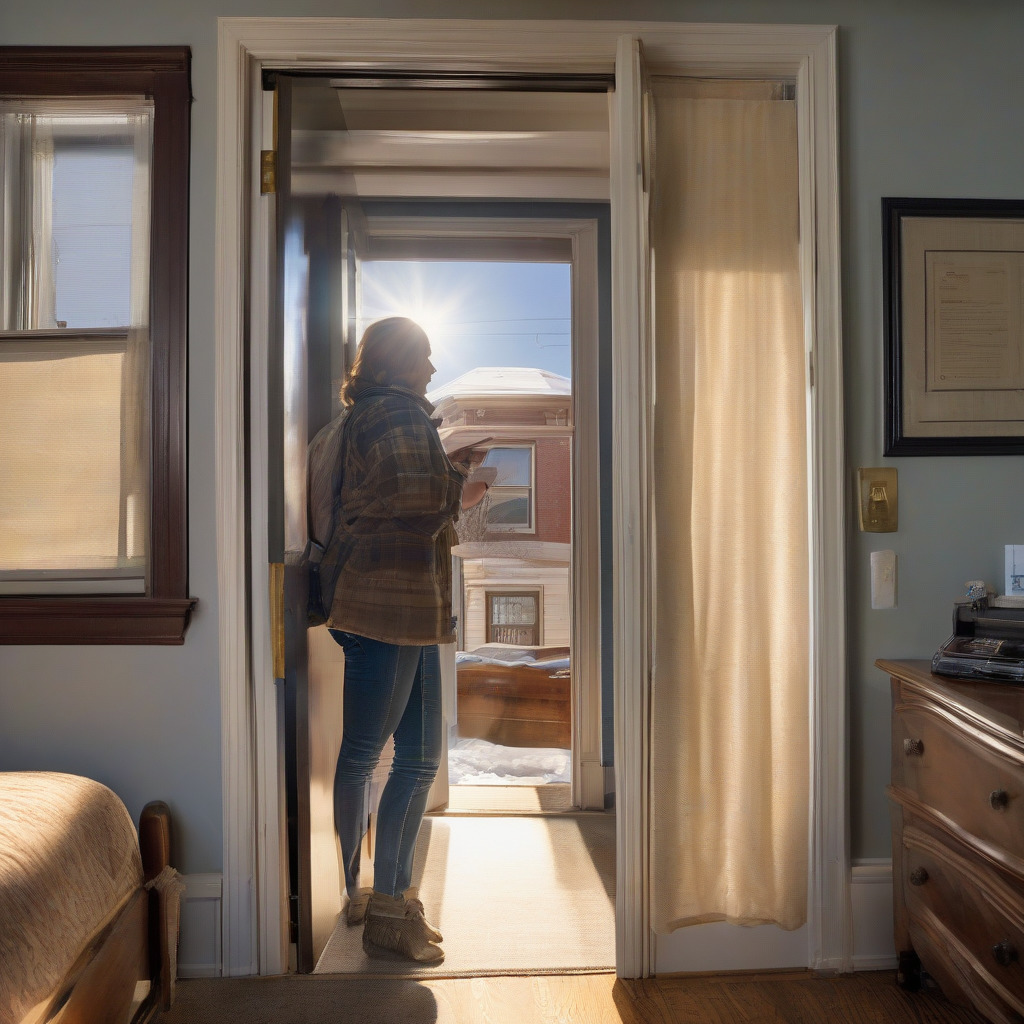
The single most important fact about short-term rental licensing in Denver is one most competitor guides bury past the fold: if you don’t live there, you can’t legally rent it. Denver issues short-term rental licenses only for a host’s primary residence. Investment properties, second homes, and units you lease to others the rest of the year are categorically off the table. That one sentence disqualifies the majority of would-be Airbnb hosts in this city, and understanding it early saves weeks of wasted paperwork.
What follows is a reported guide to Denver’s STR rules as hosts are actually encountering them in 2026 — not a reprint of the city FAQ.
Editorial note on sourcing: This guide reflects Denver’s established STR framework and interviews with active Denver hosts. Specific fee amounts, processing timelines, 2026 ordinance amendments, and enforcement totals that had not been independently confirmed as of this writing are flagged throughout. Readers making licensing decisions should confirm current details at denvergov.org/licenses or by calling Excise and Licenses at (720) 865-2702.
The Primary-Residence Rule Disqualifies Most Would-Be Hosts
Denver’s short-term rental ordinance requires one license per host at one primary address. The address on your short-term rental license must match a government-issued ID — your Colorado driver’s license or state-issued ID — or your current voter registration. The city uses this cross-check to confirm you actually live where you’re proposing to rent.
This eliminates the investment-property model entirely. You cannot license a condo you bought as an Airbnb play. You cannot license a property where your parents, a tenant, or anyone other than you holds primary residence. You cannot hold multiple STR licenses across multiple properties. No exceptions.
The only scenario Denver clearly permits is a host renting out their own home — either the entire unit while you’re traveling, or a spare bedroom while you’re present. Hosts renting a room while they remain in the dwelling are sometimes called “hosted” rentals; hosts renting the entire unit while away are “unhosted.” Denver licenses both, subject to the same primary-residence requirement.
As of early 2026, no city ordinance had created zoning-overlay exceptions or pilot carve-outs to the primary-residence rule. Denver City Council has debated STR density restrictions in high-demand neighborhoods, but the core prohibition on investment-property rentals remained in force. Check any mid-year changes through the City Council legislative archive at denvergov.org.
The License You Need, What It Costs, and How to Apply
Denver’s STR licensing is administered by the Department of Excise and Licenses. Applications go through the eLicense portal at eLicense.denvergov.org.
Before applying, confirm directly with Excise and Licenses whether the current process requires both a Short-Term Rental License and a separate Denver Business License, or whether a single application is now in place. Fees are subject to adjustment through Denver’s budget cycle and should be checked at the portal before you apply. They’re genuinely modest — which makes it all the more puzzling when hosts skip the process entirely.
The fees aren’t the financial barrier. Compliance is: proof of insurance, documentation of primary residence, and in many buildings, the HOA question addressed later.
The application package typically includes a current Colorado driver’s license or ID matching the property address (or voter registration documentation), a government-issued photo ID, proof of liability insurance, a neighbor notification form confirming you’ve informed adjacent neighbors you’re operating an STR, and a signed certification that the property is your primary residence and that you’ve reviewed applicable HOA or lease restrictions.
Insurance is what catches most first-time applicants off guard. Standard homeowners or renters insurance policies typically exclude commercial activity — and yes, renting a room on Airbnb qualifies as commercial activity in your insurer’s eyes. Contact your insurer specifically about STR liability coverage before submitting an application. Waiting until after submission invites rejection or, worse, discovering gaps in coverage after a guest injury.
How Long Approval Actually Takes
Denver hosts report significant gaps between official processing estimates and lived experience, particularly in peak application periods. Factor in at least six to eight weeks and plan accordingly.
One Capitol Hill host who applied in late 2024 described a process that stretched past two months. “I submitted everything they asked for — proof of residence, the insurance certificate, the neighbor notification. I got an automated confirmation and then essentially nothing for six weeks. When I finally called, they told me my application was still in queue and they were behind.” She received her license approximately nine weeks after submission.
A LoHi host who relicensed in early 2025 had a faster experience — roughly five weeks — but attributed it partly to having all documentation in order before opening the eLicense portal. “The application is straightforward, but if you’re missing anything, they don’t call you. They just hold it. You have to check back yourself.” That’s the kind of detail the city’s FAQ doesn’t mention.
Incomplete applications drive the extended processing times. Common deficiencies: insurance certificates that don’t name the city, neighbor notification forms without all required signatures, and ID that doesn’t match the property address on file with the county assessor. One host discovered her driver’s license still listed a previous address. She spent an extra three weeks getting her renewal pushed through — the mismatch triggered a secondary verification step she wasn’t informed about upfront. If you’ve moved in the last couple of years, check your ID address before you do anything else.
Current queue depth and actual processing timelines should be confirmed directly with Excise and Licenses at (720) 865-2702 before making application decisions.
Enforcement — How Denver Catches Unlicensed Hosts
Denver’s enforcement model is primarily complaint-driven. A neighbor, a building manager, or a competing licensed host files a complaint with Excise and Licenses, and enforcement begins from there.
The city has moved toward data-informed enforcement in recent years, pursuing agreements with platforms including Airbnb and VRBO to share listing data — specifically to cross-reference active listings against the licensed-host database. Whether that data sharing is now automated or still periodic and manual needs current confirmation. The relevant platform-accountability rules were still developing as of late 2025, and this is one area where I’d genuinely encourage hosts to call the city rather than rely on any guide, including this one.
The penalty for operating without a license has historically been cited as up to $999 per day per violation — confirm this with Excise and Licenses before relying on it. The exposure for a host operating unlicensed over months before a complaint is filed is substantial. In practice, first-offense enforcement typically involves a notice of violation, a compliance window, and a negotiated penalty rather than an immediate maximum assessment. But “nobody complained yet” is not a compliance strategy.
Separate civil penalties apply for rule violations by licensed hosts: noise complaints that result in substantiated violations, exceeding posted occupancy limits, or advertising the property in a way that misrepresents the approved unit. One RiNo host who received an enforcement notice in 2024 put it plainly: “A neighbor filed a complaint after a guest had a loud gathering on a Tuesday night. I got a notice from Excise and Licenses within about two weeks. It wasn’t a fine — it was a warning and a requirement to document what steps I’d taken. But I had to respond in writing or face escalation. It made clear that they do track these things.”
As of early 2026, Denver hadn’t adopted a formal ordinance requiring Airbnb or VRBO to delist unlicensed properties on the model of New York City’s Local Law 18. Check the City Council legislative calendar to see whether such an ordinance was moving through the process in 2026.
Taxes — What Airbnb Handles for You and What It Doesn’t
Denver’s Lodger’s Tax rate is 10.75%, applied to short-term accommodations, with Colorado state sales tax and Denver sales and use tax applying on top of that. Check current combined rates with the Denver Treasury Division before filing.
If you list on Airbnb, the platform collects and remits Denver’s Lodger’s Tax on your behalf for bookings made through it. Hosts using Airbnb exclusively for bookings generally don’t have to file separate lodger’s tax returns with the city — but confirm this directly with Airbnb’s tax resource center and make sure it applies to your specific account configuration.
VRBO maintains marketplace facilitator agreements in Colorado, but confirm directly with VRBO exactly which taxes it remits on your behalf and which remain your obligation to file independently. If you take direct bookings — through a personal website, a property management platform, or word of mouth — you’re responsible for collecting and remitting all applicable taxes. That means registering with Denver’s Treasury Division as a lodger’s tax filer and submitting returns on a schedule based on your booking volume.
Here’s a distinction most STR guides skip entirely: hosts who use Airbnb exclusively face the lightest administrative tax burden. Hosts who diversify booking channels — often smart business — take on real additional compliance obligations. One host who added a VRBO listing to supplement her Airbnb inventory didn’t realize the platform operated under different tax-remittance rules. A compliance notice arrived six months later with retroactive filing requirements and penalties. That’s an expensive lesson for something the city would have explained in a five-minute phone call.
The HOA Layer — Why a City License Isn’t Always Enough
A city-issued STR license does not override the private governing documents of a condominium association or homeowners association. In Denver’s condo-dense neighborhoods — Capitol Hill, LoDo, Uptown, Curtis Park, and Union Station in particular — a significant share of buildings have CC&Rs that either explicitly prohibit short-term rentals or restrict rentals to minimum lease terms of 30 days or longer, a dynamic we track closely in our home & property coverage.
These provisions frequently predate Denver’s licensing framework. They were written specifically to prevent Airbnb-style rentals, and the city has no authority to nullify them. A host can be fully licensed by Excise and Licenses, fully current on lodger’s tax, and still be in material breach of their HOA documents — which can mean fines from the association, forced cessation of STR activity, and litigation.
The Union Station and LoDo neighborhoods are worth flagging specifically. Tourist demand there is high, and so is the concentration of newer luxury condo buildings with professionally managed associations. Many of those associations adopted explicit STR prohibition clauses precisely in response to the proliferation of unlicensed rentals. Hosts in those buildings who obtained city licenses and began operating found themselves receiving cease-and-desist letters from their HOA within weeks. Getting the city’s blessing does not protect you here.
The legal relationship is simple: city permitting authority governs what the city allows; private covenants govern what your HOA allows. Both apply simultaneously. One does not excuse the other.
Before applying for a city license, condo owners and HOA-governed homeowners should pull the current CC&Rs from their association manager or from the county clerk’s records office. Review any amendments for rental restriction language. Check whether the association has adopted a formal STR policy separate from the CC&Rs. If the language is ambiguous, consult a real estate attorney before investing time in the city application.
What’s Changed in 2026
Denver entered 2026 without a wholesale rewrite of its STR ordinance, but the regulatory environment has tightened incrementally in ways that matter to active hosts.
On platform data sharing, Denver is pushing to build systematic data exchange with booking platforms — the city’s goal being a real-time or near-real-time cross-reference between active listings and the licensed-host database. If it works as intended, that would make the complaint-driven enforcement model largely obsolete. The formal status of Denver’s platform-accountability ordinance and any data-sharing agreements with Airbnb or VRBO should be confirmed through City Council records. The gap between what the city has announced and what’s actually operational is worth probing directly.
Denver City Council debated multiple proposals in 2024 and 2025 that would have imposed density caps on STR licenses in high-demand neighborhoods — specifically LoHi and RiNo, where the concentration of short-term rentals has drawn sustained complaints from long-term residents and housing advocates. The political momentum behind that argument has grown more serious, not less, and hosts in those neighborhoods should treat it accordingly. None of those proposals had passed into ordinance as of early 2026, but the pressure hadn’t dissipated either. Monitor City Council’s legislative calendar if you’re operating in either neighborhood.
On documentation: no ordinance had amended the standards for primary residence verification as of early 2026, but Excise and Licenses had internally tightened review of applications where the submitted ID address and the county assessor’s property address didn’t match precisely. That change affected hosts who had recently moved, hosts whose IDs reflected a P.O. box, and hosts whose units were identified differently in county records versus their physical mailing address — a more common problem than you’d expect in a city with as many multi-unit buildings as Denver.
This section is dated to early 2026. Readers checking this guide later in the year should verify through Excise and Licenses or the City Council legislative archive.
What Active Denver Hosts Say Is Actually Different This Year
The hosts with the most useful perspective on Denver’s STR environment in 2026 aren’t the ones who applied last year for the first time. They’re the ones who’ve held licenses across multiple renewal cycles and have watched the city’s enforcement approach shift.
A Capitol Hill host who has operated a licensed one-bedroom STR since 2021 put it plainly: “When I first got licensed, the city felt pretty hands-off. You got your license, you paid your fee, and unless a neighbor complained, nothing happened. Now there’s more of a sense that they’re watching. I’ve had neighbors tell me they knew exactly how to file a complaint and what would happen if they did.” She renewed her license in January 2026 without difficulty but flagged one practical wrinkle: the city wanted documentation that her insurance policy was current — not just that she’d had coverage when she first applied, but a freshly uploaded certificate. Small thing, but exactly the kind of detail that trips people up at renewal.
A LoHi host who rents out the lower unit of his owner-occupied duplex — a common configuration in that neighborhood — had a different concern. “The conversation in my neighborhood has shifted toward whether all these rentals are hurting housing availability. I’ve had neighbors tell me directly they think what I’m doing is part of the affordability problem. That wasn’t the vibe two years ago.” He also noted that a guest incident in late 2024 changed how he screens bookings. A noise complaint generated a formal warning from Excise and Licenses. “I’m much more conservative now about accepting one-night bookings on weekends. The risk of a complaint isn’t worth it for a single night’s revenue.”
Both hosts said the actual application and renewal process was manageable but that the eLicense portal remains clunky. “Not intuitive” was the phrase the Capitol Hill host used — and that tracks with every description I’ve heard. Neither had their listing flagged or removed by Airbnb for compliance reasons, though both knew of hosts in their neighborhoods who had received Airbnb notices requesting license number verification.
Before You Apply: The Right Order of Operations
Denver’s STR framework works for hosts who live in the property they want to rent. The fees are low. The application follows a clear enough process. Airbnb handles lodger’s tax remittance automatically for platform bookings. None of that is the hard part.
The hard part is what stops people before they even get to the portal.
The primary-residence rule eliminates investment properties entirely — no workarounds, no exceptions. HOA restrictions knock out a substantial share of Denver’s condo inventory regardless of what the city would otherwise allow. And enforcement, while complaint-driven rather than proactive, carries real financial exposure for hosts who skip the process or let their license lapse.
So here’s the sequence that actually matters: pull your HOA documents first. Confirm your insurance coverage second. Then open eLicense. Do it in reverse order and you’ll end up city-licensed and HOA-prohibited on the same day. It happens more than it should, and it’s entirely avoidable.
For current fee schedules, processing times, and any 2026 ordinance updates, contact Denver Excise and Licenses directly at (720) 865-2702 or visit eLicense.denvergov.org.