What Denver Tenants Must Do When They Find Mold and What Landlords Are Required to Fix
Denver's reputation for 300-plus sunny days a year does real damage to tenants who discover mold in August. The assumption that Colorado is too dry for serious mold problems leads renters to dismis…

Denver’s reputation for 300-plus sunny days a year does real damage to tenants who discover mold in August. The assumption that Colorado is too dry for serious mold problems leads renters to dismiss early signs, delay documentation, and miss the procedural steps that Colorado law requires before any remedy—legal or otherwise—becomes available. It’s a reasonable assumption. It’s also wrong in a specific and expensive way.
July and August bring the state’s monsoon season. A pattern that pushes Gulf of Mexico moisture into the Front Range, drives basement humidity well above typical levels, and deposits that moisture directly into the building envelope of older rental stock. Capitol Hill, Baker, West Colfax, and the Sun Valley corridor are full of pre-1980s brick walk-ups with original single-pane window glazing, aging window flashing, and basement garden-level units that sat sealed and unventilated through a warm, wet summer. August’s back-to-school lease-turn wave means thousands of tenants are walking into those units right now and finding the results.
If you’re one of them, most national tenant-rights sites will be almost useless. They describe California’s process, cite New York case law, or offer advice so generic it could apply to any state. None tells you what C.R.S. § 38-12-503 actually requires, how to file with the Denver Department of Public Health and Environment, or which of Colorado’s tenant remedies are real and which exist only on paper.
This guide covers the law as it stands after 2021 amendments, the DDPHE complaint process as it actually works, and an honest assessment of what remedies accomplish what.
Why August Is Denver’s Mold Discovery Month
Denver’s climate is semi-arid most of the year. The North American Monsoon catches both landlords and tenants off guard. Beginning in mid-July, moisture streaming north from the Gulf of Mexico triggers afternoon and evening thunderstorms across the metro, pushing relative humidity into ranges that older buildings in Denver’s core neighborhoods were never designed to manage.
Basement and garden-level units take the worst of it. Below-grade construction in Capitol Hill’s Victorian-era stock and Baker’s bungalow conversions lacks modern vapor barriers. Water from heavy monsoon rains saturates clay-heavy Denver soil and finds its way through foundation cracks, deteriorated window wells, and failing masonry joints. Inside a sealed, unoccupied unit—which is exactly what many apartments are between June 1 and August 15, the gap between lease terms—that moisture has nowhere to go. Mold growth on drywall, wood framing, and window sills can develop rapidly under sustained moisture exposure.
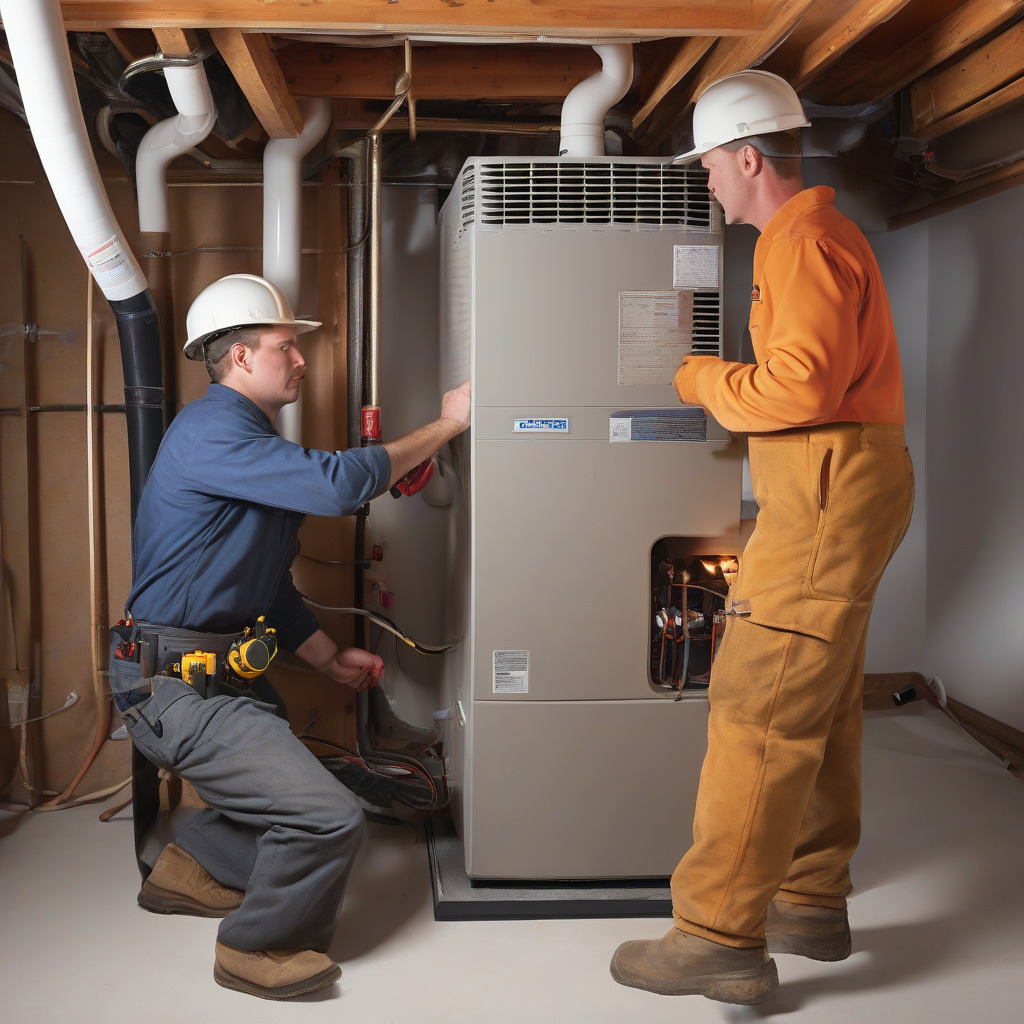
Swamp coolers compound the problem. These units dominate Denver’s older rental stock west of I-25, and if you’ve lived in one of these buildings, you know they pump a surprising amount of humidity into interior air when running. When landlords fail to properly winterize them—draining pans, sealing ducts, covering exterior louvers—they leave standing water in ductwork that becomes a mold source the following season. Buildings in West Colfax, Valverde, and Harvey Park, where concentrations of older evaporative-cooler stock are highest, show this pattern most acutely.
What doesn’t come up at lease signings: August move-ins carry a specific and largely unacknowledged risk. You may be walking into a unit that developed a mold problem over the summer and hasn’t been inspected since.
What Colorado Law Actually Requires, and What Changed in 2021
Under Colorado law, a landlord in Denver must maintain residential rental property in a condition that doesn’t materially interfere with the tenant’s life, health, or safety. Mold that results from landlord-controlled system failures—plumbing leaks, roof damage, inadequate building ventilation, failed window seals, un-winterized swamp coolers—triggers that obligation.
The controlling statute is C.R.S. § 38-12-503, Colorado’s warranty of habitability. House Bill 21-1121, which took effect in August 2021, significantly strengthened it. Before 2021, Colorado’s standard was narrower. The amendments expanded what qualifies as an uninhabitable condition to more explicitly cover mold resulting from a landlord’s failure to maintain landlord-controlled systems. The precise statutory language of the enrolled bill should be confirmed at leg.colorado.gov or through Colorado Legal Services, because the exact formulation matters in a legal dispute.
The causation question is the hinge point. Mold traceable to deferred maintenance—a plumbing leak the landlord knew about and ignored, a roof that’s been letting water in, glazing so degraded that outside moisture is entering the wall cavity, swamp cooler ductwork full of standing water—creates a clear landlord obligation. Mold that results solely from a tenant’s own behavior occupies murkier legal ground, though landlords routinely overstate how much of Denver’s rental mold problem actually fits that category.
One more thing: pre-2021 guidance on Colorado habitability law is partially outdated. If someone’s pointing you to older resources, they may not reflect what the statute actually says today.
Does Your Situation Qualify Under the Habitability Standard
Not every mold discovery rises to an uninhabitable condition under Colorado law. The test isn’t just whether mold is present, but whether it poses a meaningful health risk and whether it’s traceable to conditions the landlord controls.
Relevant factors include the extent of visible mold growth, whether there’s a documented and ongoing moisture source, and whether the tenant can demonstrate health impact. A small patch of mildew on bathroom grout almost certainly doesn’t meet the threshold. Black mold spreading across a basement bedroom wall fed by water intrusion through a failing foundation is a different matter entirely.
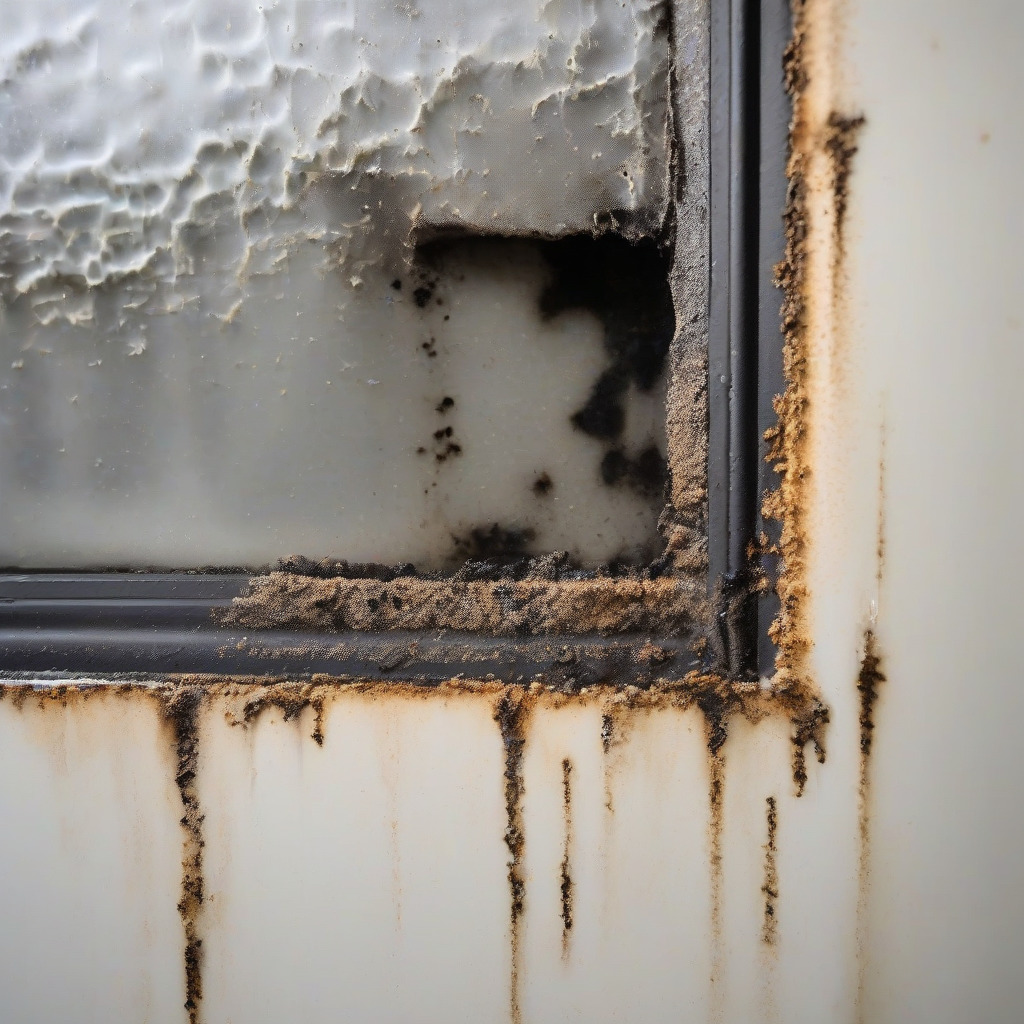
Pre-1980s brick buildings with original window glazing are a particular problem. Degraded glazing compound, failed caulk at window-frame-to-masonry junctions, and single-pane glass that allows condensation to run directly onto wood sills and into wall cavities plague buildings in Capitol Hill, Curtis Park, and Five Points. If you’re renting in one of these neighborhoods and your windows are original, take a close look at the frames before you sign anything.
Basement and garden-level units with chronic water intrusion are another common scenario. Denver’s clay soil doesn’t drain well, and many older buildings have no functioning exterior waterproofing. Window wells that collect water and lack drainage, missing or failed window well covers, cracks in block or poured foundations—these are landlord-maintenance failures, not acts of God, and not your problem to absorb.
Globeville, Elyria-Swansea, and Westwood deserve separate mention. Housing stock in these neighborhoods tends to be older, less maintained, and more likely to have multiple overlapping moisture problems. Mold complaints here may also involve the Denver Metro Fair Housing Center if conditions disproportionately affect protected-class tenants.
Denver has two separate complaint routes, and knowing which applies matters. The Denver Department of Public Health and Environment’s Environmental Health division handles health-based complaints about mold and conditions that affect tenant wellbeing—this is where most mold complaints belong. Denver Community Planning and Development handles structural and building code violations. A roof that’s actively leaking and causing mold may warrant a CPD complaint as well, but the health-impact complaint goes to DDPHE first.
Document Before You Do Anything Else
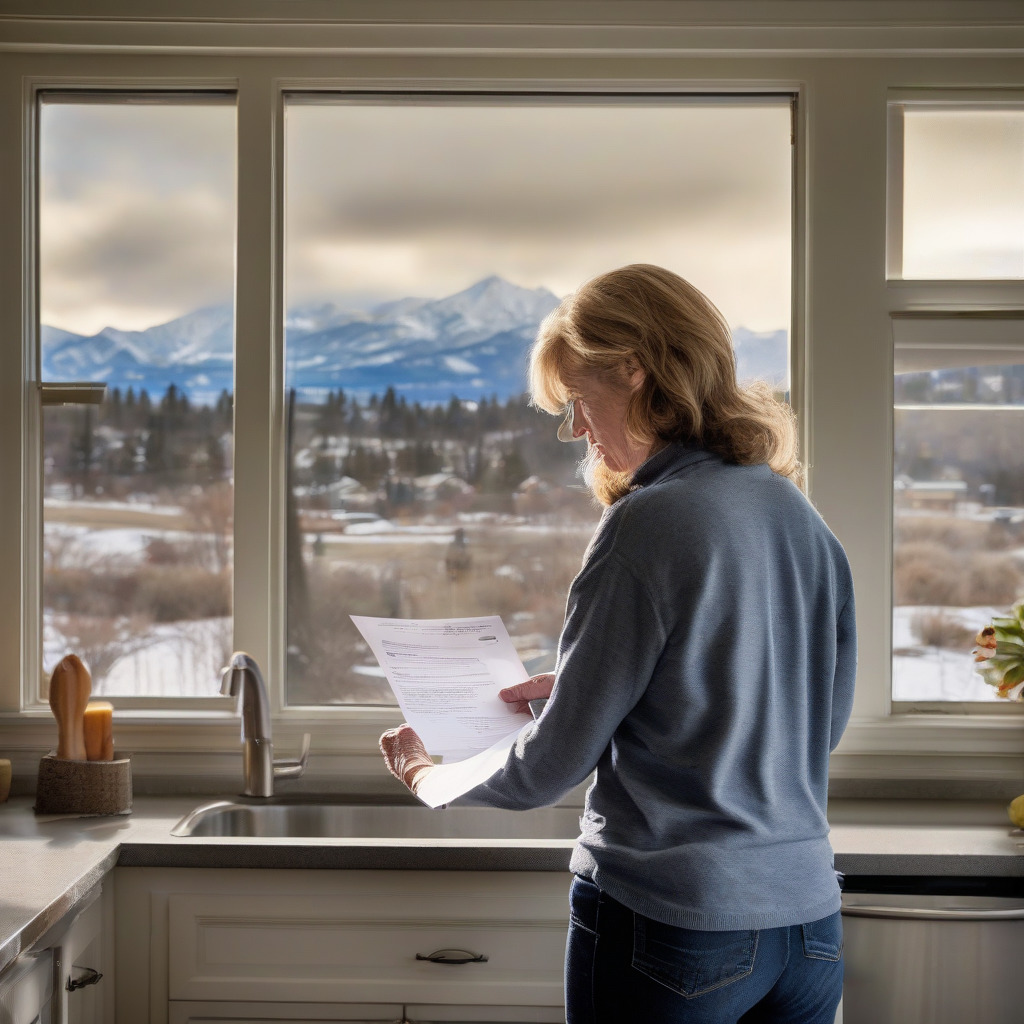
Colorado’s post-2021 statute requires written notice to the landlord before tenant remedies become available. That’s not a technicality—it’s a prerequisite. Skip this step and go straight to rent withholding or DDPHE, and you may forfeit the legal protections the statute provides.
Start by photographing everything. Get both the mold and the source. Timestamped photos of visible mold growth are necessary but not sufficient—get the water stain on the ceiling above the mold, the rusted and leaking pipe fitting, the window frame with degraded glazing compound, the standing water in the window well. A DDPHE inspector will want to identify a moisture pathway, not just confirm that mold exists.
Send written notice to your landlord by email and certified mail simultaneously. Email creates a timestamped digital record; certified mail creates proof of delivery if the dispute goes to court. The notice should describe the location, the visible mold, any moisture source you’ve identified, and state that you’re requesting remediation under C.R.S. § 38-12-503. Keep it factual and specific—room, wall, approximate square footage if you can estimate. Ask the landlord to confirm receipt and provide a timeline for remediation. A landlord who responds with “it’s just normal condensation” and nothing else has just handed you something useful.
If household members are experiencing symptoms you believe are related to mold exposure—respiratory issues, recurring headaches, worsening asthma—keep a written log with dates. This matters both for DDPHE’s assessment of severity and for any future damages claim.
Consider hiring a certified industrial hygienist. I know $300 to $600 feels like a lot when you’re already in a landlord dispute, but a CIH’s written report identifying mold species, extent, and likely moisture source carries substantially more weight with DDPHE inspectors and in court than tenant photographs alone. Verify current pricing with Denver-area CIH firms. For larger mold problems where the stakes are higher, it’s almost always worth it.
Hold this documentation package together. Everything you file with DDPHE and everything you use in any legal proceeding builds from it.
How to File a Complaint with DDPHE
Complaints can be initiated through Denver 311—call 3-1-1, or 720-913-1311 from outside Denver, or use the online portal at denvergov.org/311. You can also contact DDPHE’s Environmental Health division directly at 720-865-5401. Verify current intake contacts at denvergov.org/health before filing, as routing procedures have shifted.
Be specific when you file. Provide the address, unit number, the nature of the complaint, how long the condition has existed, and your documentation of written notice to the landlord. A clear, documented complaint gets routed efficiently. This is not the place to vent about your landlord; it’s the place to be precise.
Your complaint goes to an Environmental Health inspector, who schedules a site visit. Call DDPHE directly when you file and ask for a current estimate of scheduling time—post-pandemic staffing changes have affected timelines at many municipal agencies, and pre-pandemic benchmarks are no longer reliable. The inspector will assess visible mold, identify potential moisture pathways, and evaluate whether conditions violate health code. Their findings are the basis for any formal notice of violation issued to the property owner.
If the inspector confirms a violation, DDPHE issues a formal notice with a compliance deadline. The landlord is given a set period to remediate and document completed work. Failure to comply can result in additional enforcement action. A formal DDPHE notice of violation substantially strengthens your legal position if you need to pursue anything beyond the complaint itself.
What Your Landlord Is Legally Required to Pay For
If mold resulted from deferred maintenance or a landlord-controlled system failure—plumbing, roof, failed window seals, un-winterized swamp coolers—the obligation extends beyond simply fixing the moisture source.
Professional remediation is the largest cost. For a contained area in a Denver apartment, a single room or defined section of basement, expect roughly $1,500 to $6,000. That covers surface treatment and removal of affected drywall or framing. Structural mold in wall cavities, under flooring, or within HVAC systems runs significantly higher. Verify current pricing with Denver-area remediation contractors before you quote any number in a dispute.
If remediation requires the tenant to vacate—which professional remediators often require for containment and air scrubbing—the landlord is responsible for reasonable temporary housing costs during that period. Hotels. Storage, if needed. Personal property damaged by mold resulting from the landlord’s negligence is compensable; photograph damaged items and keep any estimates or receipts. And to the extent the unit wasn’t fully usable during the period the mold condition existed, the tenant may be entitled to a reduction in rent paid—typically addressed in a settlement or awarded in small claims court.
The standard of proof for all of this is the documentation package described above. A tenant who has timestamped photographs, written notice to the landlord with a timestamped response (or documented non-response), a DDPHE case number, and ideally a CIH report is in a fundamentally different position than a tenant who complained verbally and has nothing in writing. The difference, in practice, can be whether you recover anything at all.
Your Remedies If the Landlord Ignores You
Colorado law provides several remedies when a landlord fails to address a habitability violation. They are not equal. Here is an honest assessment.
Written notice and cure period is the prerequisite to everything else, not a remedy in itself. Under the post-2021 statute, written notice of the uninhabitable condition must be given before any statutory remedy is available. Once notice is given, the landlord has a defined period to begin remediation. Confirm the current cure period—which varies based on whether the condition is classified as an emergency—with a tenant attorney or Colorado Legal Services.
Repair-and-deduct is legally available under Colorado’s statute. The tenant arranges the repair and deducts the cost from rent, up to a statutory cap. Here’s the problem: professional mold remediation in Denver starts at $1,500 and frequently runs to $4,000 or more. Whatever the precise cap, repair-and-deduct doesn’t work for actual mold remediation. It may be appropriate for a minor issue—a leaking faucet, a broken lock. Tenants counting on it to solve a mold problem will find the math doesn’t work.
Rent withholding is higher-stakes and riskier. The 2021 amendments addressed the conditions under which a tenant may withhold rent due to a habitability failure, and whether Colorado law permits rent to be held in escrow—paid into a court-held account rather than simply pocketed—should be confirmed with an attorney before you do anything. Withholding rent without following precise statutory procedure can result in eviction for nonpayment. Do not attempt this remedy without attorney guidance.
Lease termination and constructive eviction applies when a unit is genuinely uninhabitable. A tenant may have the right to terminate the lease and hold the landlord liable for related damages when mold conditions pose a real health risk. To succeed, the tenant must typically have given notice, allowed the landlord time to cure, and then vacated because conditions remained dangerous. Vacating without this procedural foundation can leave the tenant liable for remaining rent. Consult a tenant-side attorney before you move out.
The honest summary: repair-and-deduct is mostly useless for mold. Rent withholding can work but can also blow up badly. Lease termination is legitimate in serious cases but requires careful execution. If you’re past the documentation stage and the landlord is still ignoring you, get an attorney.
Where to Get Free Help in Denver Right Now
Colorado Legal Services provides free civil legal assistance to income-qualifying tenants, including representation in habitability disputes. Apply at coloradolegalservices.org. Eligibility is income-based and current intake capacity varies—contact them early, before the situation has escalated, when there’s still time to shape a strategy rather than just respond to one.
Denver Metro Fair Housing Center is relevant if you believe a landlord’s failure to address mold disproportionately affects tenants in a protected class. Verify current contact information through Denver’s 311 system or at denvergov.org/health.
The Colorado Bar Association Lawyer Referral Service connects tenants who don’t qualify for free legal aid with private tenant-side attorneys. Call 800-332-6736 or use the referral portal at cobar.org. Many tenant attorneys in Denver offer a reduced-rate or free initial consultation for habitability matters. Make the call before you decide you can’t afford one.
Bring your full documentation package to any consultation—photographs, copies of written notice to the landlord and any response received, your DDPHE complaint case reference, any CIH report, and your written log of health symptoms. An attorney can assess your case in a single meeting with those materials. Without them, you’ll spend most of the consultation reconstructing a record you should have already built.
Sidebar: Denver’s Mold Calendar, When Risk Peaks and Why
July through August: Monsoon humidity. The North American Monsoon is Denver’s most overlooked weather pattern. Gulf moisture drives afternoon thunderstorms and sustained elevated humidity through late summer, pushing relative humidity in poorly sealed basement units well above normal Front Range levels. This is peak mold-formation season for below-grade units, particularly in older masonry buildings in Capitol Hill, Baker, Curtis Park, and West Colfax where original window glazing and foundation waterproofing have deteriorated.
October through March: Freeze-thaw damage that won’t show itself until summer. Denver’s freeze-thaw cycles—temperatures swinging above and below 32°F dozens of times per season—crack masonry, degrade caulk, and open pathways in flashing and window surrounds. The damage accumulates silently through winter. By the following summer, those open pathways conduct moisture into wall cavities, where mold develops during warm weather. Tenants who move into a unit in August and find mold are often looking at damage that started accumulating the previous October. The timeline matters because landlords will often claim the mold is new. It usually isn’t.
Fall: Swamp cooler winterization. Evaporative coolers should be drained, pads removed or dried, water lines cleared, and duct openings sealed before overnight temperatures consistently drop below freezing. Landlords who skip this leave standing water in pans and ductwork that becomes a mold source by the following spring. Buildings in West Colfax, Valverde, Harvey Park, and Westwood have high concentrations of evaporative-cooler-equipped older rental stock. If your unit has a swamp cooler and you’re moving in during August, ask the landlord directly when it was last winterized and when the ducts were last inspected. The question itself tells you something about how the property is managed.
For updates to DDPHE contact information and current complaint intake procedures, verify directly at denvergov.org/health or by calling 720-865-5401. Colorado’s habitability statutes are subject to legislative amendment; tenants with active disputes should confirm current statutory language at leg.colorado.gov or through Colorado Legal Services.
For more local coverage, explore our Home & Property section.