How to File a Hail Damage Roof Insurance Claim in Denver Without Getting Burned
Colorado law gives you more power than your insurer wants you to know. Here's how to use it.

Colorado law gives you more power than your insurer wants you to know. Here’s how to use it.
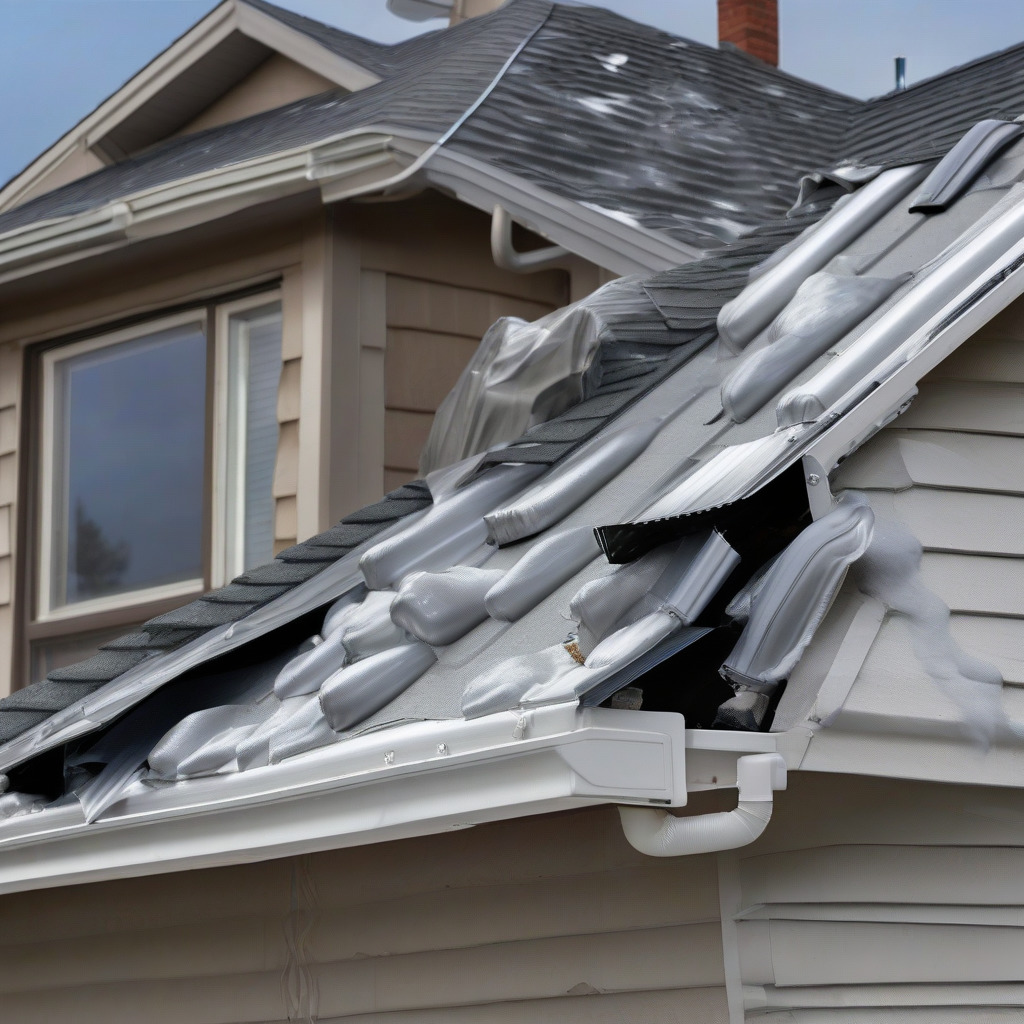
The rhythm is familiar to anyone who’s owned a home along the Front Range for more than a few summers. A fast-moving supercell rolls off the foothills somewhere around Jefferson County on a late-June afternoon, tracks northeast through Lakewood, Wheat Ridge, and Arvada, drops golf ball-size hail on four or five zip codes, and is gone in twenty minutes. By the next morning, your gutters are filled with granules, a neighbor’s skylight is cracked, and vans with Texas and Oklahoma plates are trolling your block — someone knocking on doors before you’ve had your coffee.
Denver and the surrounding metro are among the most hail-exposed urban areas in the country. The I-70 corridor through Aurora and the Highlands Ranch table mesa areas have been repeatedly hammered in recent storm seasons.
What doesn’t exist anywhere online is an independent, consumer-side guide to what comes next: the claim process, the adjuster dispute, the contractor selection. Every online resource I’ve found embeds a roofing company’s sales pitch somewhere in it. This is that guide.
Why the Front Range Gets Hit So Hard, and Why June Is the Month to Watch
The geography is the problem. Denver sits at the convergence of two atmospheric conditions that produce severe convective storms: dry air descending off the Rockies and warm, moist air flowing north from the Gulf of Mexico along the eastern plains. When those air masses collide over the foothills — particularly over Jefferson County and the immediate western suburbs — the resulting supercells develop rapidly and can sustain large hail across a long track.
The highest-frequency path runs northeast from the foothills through Lakewood and Wheat Ridge, continues through Arvada and Westminster, and angles toward Aurora, Centennial, and Highlands Ranch on the southeastern end. The I-70 corridor through the metro is effectively a hail highway. Residents in Lakewood’s Green Mountain neighborhoods, the older subdivisions of Wheat Ridge near 44th and Kipling, south Aurora between Hampden and Iliff, and the Highlands Ranch table mesa areas have collectively filed thousands of claims across back-to-back storm seasons. May through August is the window, but June and July account for the majority of large-hail events — defined as hail one inch or larger.
After a June storm, the scramble begins on two fronts. Homeowners try to figure out whether their roof is actually damaged and whether their insurer will pay for it. Contractors — some legitimate, many not — try to capture that work before homeowners understand the process. Those two problems are inseparable, and this guide addresses both.
The 24-Hour Documentation Window
The single most important thing you can do in the first 24 hours after a hail event is not call a contractor. Document your property independently, before anyone else touches it.
Your insurer’s adjuster will eventually inspect your roof and form a judgment about storm severity, damage extent, and whether any damage is from this storm or a prior one. The more independent corroborating evidence you establish before that inspection — timestamped material you created before any contractor or adjuster arrived — the stronger your position if the estimate comes in low or the carrier disputes the storm date.
Start with surfaces that aren’t your roof. Gutters and downspouts establish hail size and storm severity as independent facts. Your gutters will show hail impact as circular spatter marks — sometimes called “dings” or “half-moon” impressions — on aluminum. Photograph the entire gutter run from multiple angles. These marks are nearly impossible to fake or explain away, and adjusters know it.
The aluminum fins on your exterior AC condenser are extremely sensitive to hail. Even three-quarter-inch hail will visibly dent them. Photograph the fins on all four sides up close. Honestly, this is often cleaner evidence than anything on the roof itself. Hail also punches through aluminum screen mesh in a recognizable pattern, so do not replace or remove screens before the adjuster inspects.
Look for fresh, raw wood bruising on weathered fence boards and deck surfaces — a sharp contrast to the gray, oxidized surrounding wood. If you had a car in the driveway, photograph the hood, trunk lid, and roof before you move it. Dented panels from the same event are powerful corroboration of hail size.
If you have attic access, go up within 24 hours and photograph any light penetration through the roof deck, any new moisture staining, or any visible punctures. Interior water intrusion documented within hours of a storm is difficult for any carrier to dispute.
After photographing the property, go to the NOAA Storm Events Database and search your zip code and date. NOAA maintains verified hail reports by location and date, sourced from trained weather spotters and radar data. If NOAA confirms significant hail in your zip code on the date you’re claiming, screenshot or print that record. It’s evidence you didn’t create — which is exactly the point. Your phone camera automatically embeds date and time metadata in every photograph. Do not edit or screenshot your photos; submit the originals.
Do not authorize any contractor to begin repairs, tarping, or debris removal before the insurer’s initial adjuster inspection unless you’ve conducted and preserved a comprehensive photo and video walkthrough of every inch of pre-repair condition first. Once work begins, the adjuster loses the ability to inspect original conditions. The carrier will use that against you. Guaranteed.
Filing the Claim — Timelines, Carrier Obligations, and What Colorado Law Requires
File your claim promptly. Most Colorado homeowner policies nominally allow one to two years to file a hail claim, but that window is a trap if you interpret it loosely. The longer you wait, the more your insurer can argue that additional weathering, foot traffic from prior contractor inspections, or a subsequent storm caused or contributed to the damage. File within days.
When you call or go online to open the claim, have ready your policy number, the date of the storm, and your mortgage lender’s name and loan number if you carry lender-required coverage. You’re not required to have a contractor estimate before filing. Many experienced public adjusters recommend filing before you get one, so the carrier isn’t simply matching a contractor’s number after the fact — a detail the industry doesn’t exactly advertise.
Colorado Revised Statutes § 10-3-1115 governs insurer obligations after you file a claim, including mandatory acknowledgment and response windows. These are statutory obligations enforced by the Colorado Division of Insurance, not suggestions. Read your policy’s claims section and compare it against what the statute requires. The Division of Insurance publishes the statute text at doi.colorado.gov.
Adjuster response times during peak storm season stretch badly in Colorado. Major carriers including State Farm, USAA, and Farmers all operate in the market, and post-catastrophe backlogs are a consistent pattern after large Front Range events. The Colorado Division of Insurance publishes complaint ratio data by carrier at doi.colorado.gov — search by carrier name under “Consumer Resources.” That data reflects actual consumer experience with specific companies in this state. Review it before you decide how aggressively to follow up on a stalled claim.
Chubb and PURE serve higher-value properties and typically assign dedicated field adjusters rather than virtual inspectors. Their guaranteed replacement cost policies handle depreciation differently than standard policies, which matters significantly in the ACV/RCV discussion below. If you believe your carrier has missed its statutory response obligations, document the date you filed, the date of any contact, and the current date. That timeline becomes your evidence in a DORA complaint if you need to file one.
How the Adjuster Decides What Your Claim Is Worth
Most Denver homeowners picture an adjuster as someone who climbs on the roof, looks around, and makes a judgment call. The reality is more mechanical. Roughly 80 percent of adjusters in the country use Xactimate software to price claims. Xactimate is a database of labor and material costs updated monthly and priced by zip code. A Denver estimate prices out differently than an estimate for the same scope in a rural Eastern Plains zip code because the local price database reflects actual labor market conditions. If your adjuster applies outdated pricing or pulls the wrong regional database — it happens — your estimate can be structurally low before they’ve made a single judgment call about what to repair.
On the roof itself, the adjuster looks for functional damage, as distinct from cosmetic. On asphalt shingles, this means soft spots beneath the granule layer. Bruising that disrupts the mat beneath the surface compromises the shingle’s ability to shed water. An experienced inspector tests these spots with a finger press — legitimate bruising has a distinct soft, spongy quality that differs from manufacturer defects or foot-traffic damage. Hail strikes also accelerate granule loss, shortening the remaining service life of the shingle. The same things Denver home inspectors flag most often — underlayment gaps, failed flashing, compromised decking — are what a thorough adjuster should be accounting for in the scope.
The cosmetic-versus-functional distinction is increasingly contested in Colorado. If your adjuster classifies your damage as cosmetic-only, get that characterization in writing, ask for the specific policy language supporting it, and prepare to challenge it through the supplement or appraisal process described below.
The ACV vs. RCV Depreciation Holdback Most Denver Homeowners Never Collect
This is the part that costs people real money. It is the most consistently misunderstood aspect of the entire claim process, and the industry has no particular interest in clarifying it.
Most standard homeowner policies in Colorado cover roof replacement at Replacement Cost Value. But they don’t pay RCV upfront. Here’s the actual sequence. Your insurer calculates the full replacement cost of your roof — for a typical Denver metro home, a full asphalt shingle reroof runs somewhere in the range of $9,000 to $18,000 depending on pitch, layers, materials, and whether the storm hit during surge pricing. The insurer then calculates depreciation based on the roof’s age and remaining useful life, and issues an initial Actual Cash Value payment: replacement cost minus depreciation minus your deductible.
Speaking of deductibles: Colorado homeowners should know that hail and wind deductibles here are commonly structured as a percentage of dwelling coverage — often one to two percent — rather than a flat dollar amount. On a $400,000 dwelling policy, a one-percent deductible is $4,000 out of pocket. Many homeowners don’t realize this until claim time.
You hire a licensed contractor, they complete the job, a Denver Community Development roofing permit is pulled and passes final inspection. You then submit the contractor’s final invoice and the permit closeout documentation to your insurer, which releases the recoverable depreciation holdback.
This is where the money disappears for a significant share of Denver homeowners. They accept the ACV payment. The job gets done. They never submit the final invoice and permit documentation to collect the holdback. The insurer does not remind them. The depreciation sits uncollected. There is a deadline — check your policy’s Loss Settlement section for the exact window — after which the holdback is no longer recoverable. Read your policy, note that deadline, and calendar it the day you receive your ACV check. Put it in your phone right now.
If your contractor never pulls a permit, or pulls one but never schedules the final inspection, the permit is never officially closed. Many RCV carriers require a closed permit with a passed final inspection before releasing the depreciation holdback. A contractor who skips the permit step isn’t just violating city code. They may be costing you thousands of dollars in insurance proceeds that are already yours.
Denver Roofing Permit Requirements and Why Your Insurer Cares
Any full roof replacement in the City and County of Denver requires a permit filed through Denver Community Development’s eDevelopment portal at edevelopment.denvergov.org. Any contractor who skips it is telling you something important about how they operate — and what else they’ll cut corners on.
Permit fees are calculated on the assessed value of the work; verify the current fee schedule at the portal before filing, as fees are periodically revised. Applications typically process with same-day approval during normal city workload. After a major hail event, when the city is simultaneously processing a surge of roofing permits, turnaround extends.
A Denver building inspector must conduct a final inspection before the permit closes. The inspector verifies that the installation meets current code requirements including underlayment type, fastening pattern, drip edge installation, and flashing at penetrations and walls. A job that passes inspection has been reviewed by the city. A job that skipped the permit has not.
If you live outside city limits, Aurora, Lakewood, Englewood, and Highlands Ranch (under Douglas County) all operate their own permit authorities entirely independent of Denver Community Development. The permit requirement is universal — only the portal and fee schedule differ. Contact your municipality’s building division directly to confirm requirements.
Storm-Chasing Contractors — Denver-Specific Red Flags and Your Legal Rights
After the I-70 corridor takes a significant hit, out-of-state plates are visible in Wheat Ridge, Lakewood, and Aurora within 24 to 48 hours. You’ve probably seen this yourself if you’ve lived here through a few storm seasons. Some of these contractors are legitimate roofers from adjacent states who follow seasonal work. Many are not.
The most severe red flag first. Any contractor offering to cover, waive, or absorb your deductible is breaking Colorado law. The Colorado Roofing Consumer Protection Act (C.R.S. § 6-22-101 et seq.) explicitly prohibits a contractor from offering to pay or waive a homeowner’s insurance deductible as an inducement to enter a contract. The penalty falls on the contractor, not the homeowner — but signing such a contract can complicate your claim and invite carrier allegations of fraud by participation. If any contractor mentions covering your deductible, walk away and note their name and license number. The pitch is so common after major storms here that I’d treat it as disqualifying regardless of how professional the contractor otherwise seems.
Contractors presenting an Assignment of Benefits agreement are also a problem. Colorado has moved to restrict AOB arrangements that transfer your insurance claim rights to a contractor, allowing them to negotiate and collect directly from your insurer without your ongoing involvement. Do not sign any document that assigns your insurance rights to a contractor without first consulting an attorney who handles insurance law.
Colorado requires roofing contractors to be licensed under C.R.S. § 6-22-101 et seq. You can verify any contractor’s license status at dora.colorado.gov. This takes two minutes. If a contractor can’t provide a Colorado license number, or the number doesn’t verify, don’t hire them. Homeowners who’ve already signed a suspicious contract should read our home and property coverage for additional consumer protections that apply to residential work in Colorado.
“We’re in your neighborhood today and can get you on the schedule, but you have to sign now” is a sales script. Legitimate contractors working a normal post-storm backlog aren’t turning away work because you need three days to verify their license and check references. The urgency is manufactured.
A post office box in a Colorado town is not a local address. Ask for a physical business location and local references, then Google the address. The Colorado Roofing Consumer Protection Act also gives you a specific statutory rescission right: if your insurer does not cover the work described in the contract, you have 72 hours after signing to cancel without penalty. Any contract that waives this right is unenforceable.
If a contractor collects a deposit and then stops communicating or disappears before completing the work, that’s a separate legal problem with its own remedies — a situation covered in detail for Denver homeowners in what to do when a contractor takes your deposit and disappears.
When the Estimate Comes In Low
Low adjuster estimates are common enough in Denver’s post-storm environment that understanding the escalation process is essential. Your contractor can re-inspect the roof — ideally with you or your public adjuster present — and prepare a supplemental estimate in Xactimate identifying specific line items the original adjuster missed or underpriced. Common examples include code-required items that weren’t priced in, manufacturer-required accessories, or additional decking replacement that wasn’t visible until tear-off. The contractor submits the supplement to your insurer’s claims department, which reviews and accepts, partially accepts, or rejects it. This back-and-forth can take weeks, and carriers vary in how they handle it.
If supplement negotiations break down, almost every standard Colorado homeowner policy contains an appraisal clause, typically in the Loss Settlement or Conditions section. Each party hires a licensed appraiser; those two appraisers select an umpire; at least two of the three must agree on a value, and that value is binding on both parties. The appraisal clause doesn’t resolve coverage disputes — if your insurer says cosmetic damage is excluded, the appraisal panel can’t override that. But on the question of what covered work is actually worth, the appraisal process is often faster and considerably cheaper than litigation.
A licensed public adjuster works for you, not your insurer, and handles supplement negotiation and appraisal on your behalf. Colorado public adjusters typically charge ten to fifteen percent of the final settlement. On a small disputed supplement, that fee probably doesn’t pencil out. On a large dispute — complex damage, a carrier that has denied or partially denied a significant claim — the math can shift quickly. I’d consult one before accepting any denial on a claim over $15,000. The Colorado Division of Insurance licenses public adjusters; verify any public adjuster’s license at dora.colorado.gov.
Colorado Revised Statutes § 10-3-1116 contains a penalty statute most homeowners never hear about. If a carrier’s delay or denial lacks a reasonable basis in fact or law, the penalty owed to the homeowner is two times the covered benefit, plus attorney fees. This requires a legal finding that the carrier acted unreasonably — not merely that they were slow or that you disagree with their number. But it exists, and its existence changes the economics of bad-faith claim handling for insurers operating in Colorado. If you believe your carrier has actually violated the statutory obligations outlined in § 10-3-1115 — not just made a judgment call you dislike, but genuinely violated the law — consult a Colorado insurance attorney before accepting a final settlement.
Filing a DORA Complaint — When and How to Use Colorado’s Regulatory Process
The Colorado Division of Insurance complaint process has real teeth. File a documented complaint when your carrier fails to meet the acknowledgment or response deadlines under C.R.S. § 10-3-1115. Also file when the carrier issues a denial without citing specific policy language, fails to respond to supplement submissions over an extended period, or issues a payment that can’t be reconciled with any plausible reading of your policy.
File at doi.colorado.gov. The complaint form asks for basic claim information, a chronology with dates, and supporting documentation. DORA contacts the carrier, which is required to respond. The Division reviews both submissions and determines whether the carrier violated any statutory obligation. A DORA complaint doesn’t automatically change your settlement — but it creates a formal regulatory record, and carriers with high complaint ratios face scrutiny from the Division and, in serious cases, enforcement action.
The public complaint ratio data DORA publishes reflects real conduct, not marketing. Look at it.
If you’ve also encountered a contractor who offered to waive your deductible, presented a suspect AOB agreement, or performed work without a permit, the Colorado Attorney General’s office and the DORA licensing division are the appropriate complaint destinations for those issues.
The Shortest Version, for Anyone Reading This While Watching Clouds Build Over the Foothills
File the claim yourself, promptly. Document everything before any contractor or adjuster touches the property.
Your ACV check is not your full settlement. The depreciation holdback is real money you must actively claim after the job is permitted, completed, and inspected — and there’s a deadline. Miss it and the money is gone. The insurer will not remind you.
Any contractor who offers to cover your deductible is breaking Colorado law. Any contractor who can’t produce a verifiable Colorado license number shouldn’t be on your roof. If your estimate comes in low, you have a supplement and appraisal process available. If your carrier delays or denies without reasonable basis, you have both DORA and a penalty statute behind you.
The storm that hits your neighborhood this June will be followed within 48 hours by contractors competing hard for your signature. The homeowners who come out ahead are the ones who already understood the process before anyone knocked on their door.
CityDesk Denver covers local business, development, and consumer affairs for Denver-area residents. For permit information, visit edevelopment.denvergov.org. For contractor license verification, visit dora.colorado.gov. For insurance complaints, visit doi.colorado.gov.