What $500,000 Actually Buys in Different Denver Neighborhoods Right Now
Same price. Wildly different square footage, condition, commute, and monthly costs.

Same price. Wildly different square footage, condition, commute, and monthly costs.
If you have a pre-approval letter and a $500,000 budget, you already know Denver doesn’t give you easy answers. You’ve seen the spread — a Sloan’s Lake condo versus a Green Valley Ranch house with a two-car garage — and wondered what’s actually going on beneath the listing photos. This piece answers that directly.
The same data points run across every neighborhood: square footage, price per square foot, construction era and condition flags, RTD transit access with actual line names and realistic commute times to Union Station, and HOA exposure. Transit and HOA are consistently underweighted at the pre-offer stage and consistently matter once you’re living there. Almost every buyer I’ve talked to says they wish they’d run those numbers harder before falling in love with a specific address.
Where $500,000 Sits in the Denver Market Right Now
Below the single-family median in most of the city, that’s where. In the urban core and established west-side neighborhoods, $500K is mostly a condo or townhome budget. In the northeast and southwest quadrants, it buys a house with real square footage.
The price-per-square-foot gap between the neighborhoods covered here is the story. At Sloan’s Lake, you’re paying roughly $480–$580 per square foot for a condo in the $500K range. In Green Valley Ranch, comparable closed sales come in around $220–$250 per square foot. That’s not a rounding error. It’s the difference between 900 square feet and 2,100 square feet at the same purchase price — which is, in practice, the difference between a different kind of life.
Denver’s listing season peaks March through June. Buyers reading this in late 2025 or early 2026 should expect more inventory in that window, but also more competition. Late winter can offer negotiating room that evaporates by April — sometimes within a single weekend.
The Most Space for the Money: Green Valley Ranch and Montbello
For buyers whose first question is square footage per dollar, two neighborhoods answer it clearly.
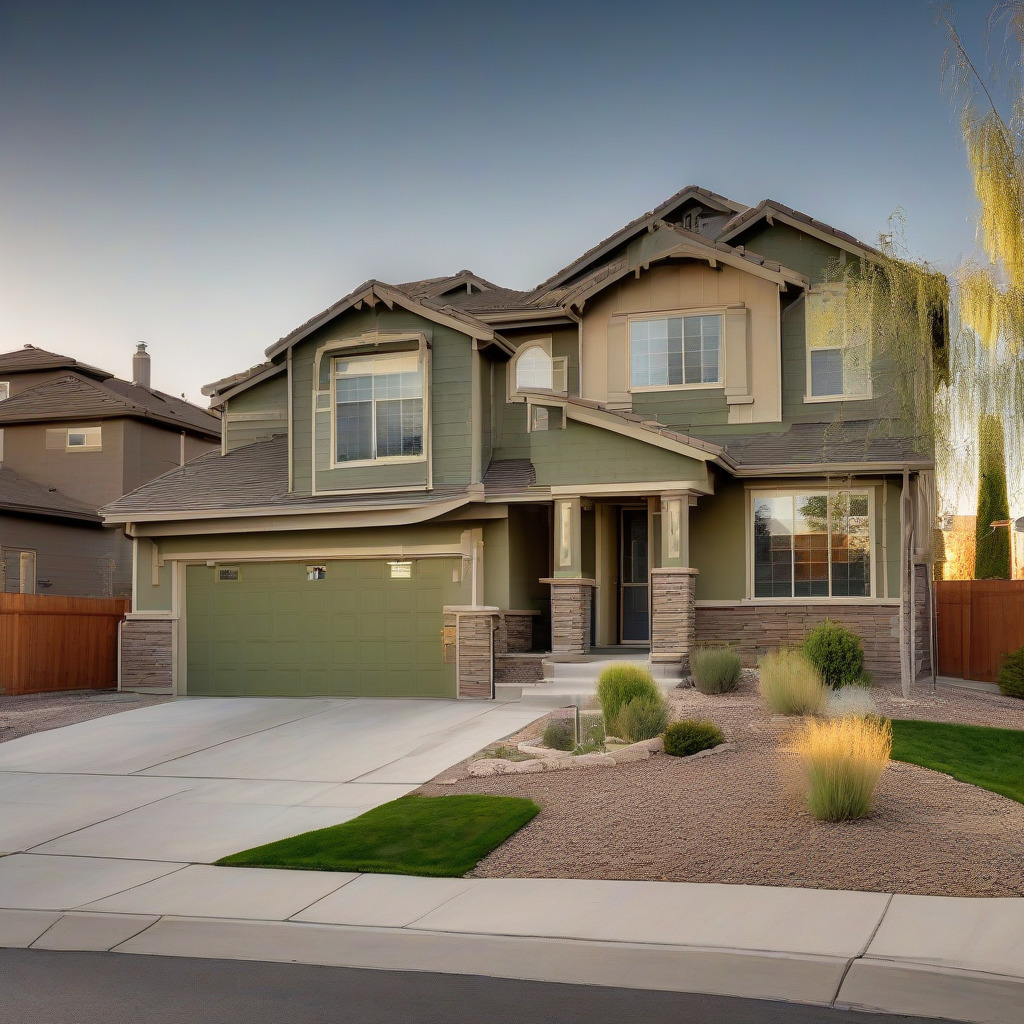
In Green Valley Ranch, homes in the $500K range routinely deliver 1,600 to 2,200 square feet of 2000s and 2010s construction. Two-car garage. Functional yard. These aren’t teardowns — they’re homes built with modern framing and updated mechanicals, and they work for families. The price-per-square-foot math is among the best inside Denver city limits at this price point.
The catch that most coverage skips: Green Valley Ranch has serious HOA exposure. Fees in active HOA communities across the neighborhood typically run $150–$350 per month depending on the subdivision, and a large share of GVR falls under some form of HOA governance. At $300 a month, that’s $3,600 annually added to your carrying cost. When you stack that against a Westwood bungalow with zero HOA, the monthly cost gap narrows even though the Westwood home costs less and delivers less square footage. Run those numbers before you fall in love with the garage. Before, not after.
For commuters, GVR’s transit connection deserves more credit than it gets. The 61st & Pena Station on RTD’s A Line connects to Union Station in roughly 15–20 minutes and includes a Park-and-Ride. DIA is about 15 minutes by car — a real asset for airport employees and frequent travelers that almost never appears in these comparisons.
Montbello, immediately northwest of GVR, runs close behind on space per dollar and gets overlooked in most coverage. Ranch-style homes on larger lots from the 1970s and 1980s are still available here, which leaves room in a $500K budget for inspection-driven negotiations. The transit access is better than its reputation: Peoria Station on the A Line is an 8–12 minute drive from most of the neighborhood, with a 20-minute connection to Union Station. For anyone with airport-area employment, that matters.
One due-diligence item in Montbello requires parcel-level attention. Sand Creek runs through and adjacent to parts of the neighborhood, and FEMA flood zone designations vary block to block. A home outside a flood zone can sit two blocks from one that’s squarely inside one — which sounds like an exaggeration until you’re pulling the flood map yourself. Required flood insurance adds to your carrying cost and can complicate a future sale. Pull the FEMA Flood Map Service Center for any specific address before you write an offer. This takes ten minutes and has cost people tens of thousands when skipped.
The Condition Problem in Westwood and Harvey Park
Both neighborhoods offer single-family homes under $500,000 with real character and genuine upside. But condition is the first-order question here, not location.
Westwood’s housing stock runs primarily 1940s through 1960s. Listings show a wide spread between two very different product types that can look similar at list price: investor-flipped homes and original-condition homes. These are not the same purchase.
An original-condition Westwood bungalow typically runs 1,000 to 1,400 square feet above grade. What a pre-inspection surfaces is what matters. Look for knob-and-tube or early-panel electrical, original cast iron or galvanized plumbing, and a roof approaching or past its service life. Each is individually manageable. Together, they can represent $40,000–$80,000 in near-term capital expenditure. Budget for it before you’re emotionally committed to a specific address — because once you’ve mentally arranged your furniture in a place, inspection findings start feeling like obstacles rather than information.
The flipped inventory carries its own risks. Cosmetic renovation — new flooring, fresh paint, a redone kitchen — doesn’t mean mechanicals were touched. A flip that photographs beautifully but has an aging roof and original furnace isn’t the same purchase as one where those systems were replaced. The listing photos will not tell you which one you’re looking at. Your inspector will.
Harvey Park, east of Sheridan Boulevard and south of the Federal/Dartmouth corridor, rarely shows up in roundups of Denver value neighborhoods. It should appear more often. Lots tend to run larger than Westwood’s, and many homes in this price range include full unfinished basements — 600 to 900 square feet a buyer can develop over time. Bear Creek Trail is accessible from the neighborhood and connects west toward Bear Creek Lake Park, which is the kind of amenity that a “park access” bullet point in a listing description never quite captures. Ask anyone who uses that trail on a Saturday morning.
The honest limitation in Harvey Park is transit. There’s no light rail nearby. Bus service exists — RTD Routes 12 and 35 serve the area — but it won’t make car-free living realistic for most schedules. If your commute requires downtown access during rush hour, model the drive times before you fall for a Harvey Park house, especially heading toward I-25 on South Federal. That stretch will surprise you the first time it does.
Both Westwood and Harvey Park qualify under Denver’s updated ADU ordinance in many of their zone districts, though eligibility depends on specific zone district designation. Confirm with Denver Community Planning and Development before assuming any parcel qualifies. For buyers willing to invest in a basement finish or backyard unit over a five-year hold, that ordinance changes the math.
Westwood also sits adjacent to drainage channels including Weir Gulch. Like Montbello, flood plain designations vary at the parcel level. Run any specific address through the FEMA Flood Map Service Center before you proceed.
Two Neighborhoods Mid-Transition: Elyria-Swansea and Clayton/Cole
Elyria-Swansea’s story centers on one specific local development: CDOT’s I-70 highway cover project, substantially completed in 2024. The cap covers the interstate through the neighborhood and added park space on the surface — a real change for residents who lived with freeway noise and visual blight as their dominant streetscape feature for decades. Prices have moved in response. At $500,000, buyers are looking at homes that typically run 900 to 1,300 square feet on city lots, with some new infill alongside the older bungalow stock.
Two things to investigate independently here. First, air quality: the highway cap reduces sound and visual impact but doesn’t change the air quality dynamics of a neighborhood adjacent to one of Colorado’s busiest freight corridors. CDOT and EPA monitoring data for the corridor is publicly available and worth pulling before you buy. Second, the National Western Complex redevelopment and Brighton Boulevard buildout remain works in progress. Proximity to future development carries real risk alongside the upside, and the timeline has shifted before. Go in clear-eyed about both sides of that bet.
Clayton and Cole, roughly north of City Park East, offer a different mid-transition story. At $500,000, buyers land mid-market — typically a smaller single-family home or a well-located townhome. RTD access includes stops on the D, F, and H lines via the 28th/Welton corridor, with the A Line also reachable for connections to Union Station and DIA. City Park, the Denver Museum of Nature and Science, and the Denver Zoo are walkable or a short bike ride depending on exactly where you land. On a given Sunday morning, that proximity is a genuine quality-of-life fact, not a listing-copy flourish.
The gentrification dynamic in Clayton and Cole is relevant context an honest guide should name. These neighborhoods have seen substantial price appreciation over the past decade as buyers priced out of Congress Park and Park Hill moved north and west. That appreciation has created real displacement pressure for long-term residents. This isn’t a reason to avoid buying here. But you’re buying into a neighborhood in the middle of a demographic and economic shift, and you’re part of that shift. Most buyers know this on some level. Worth saying out loud anyway.
What $500,000 Actually Buys at Sloan’s Lake
Sloan’s Lake is the clearest illustration of the location-versus-space tradeoff in Denver right now. The single-family median in the neighborhood is well above $700,000. At $500,000, you’re almost exclusively in condo or townhome territory — units running 700 to 1,000 square feet, typically in mid-density buildings or newer townhome developments along the commercial corridors.
Here’s what you’re actually buying: W Line light rail access at Perry or Sheridan stations. A 10-minute walk to Edgewater Public Market. The lake itself, which is a substantial urban amenity with a running path and mountain views that don’t get old. One of the higher Walk Scores in this comparison.
What you need to model carefully is the HOA. Fees on the condo and townhome product in this neighborhood run $400–$600 per month on many buildings, and some older condo buildings with deferred maintenance reserves run higher. At $500 a month, you’re adding $6,000 annually to your carrying cost before property taxes, insurance, or utilities. Run the actual monthly cost comparison against a Green Valley Ranch mortgage with a $250/month HOA. The Sloan’s Lake unit often costs more per month in real dollars despite the identical purchase price. That catches people off guard more often than it should.
The case for buying here at $500K is real, but it’s specific. It works for buyers who value walkability and transit over square footage, who aren’t planning to grow a family in the unit, and who treat the light rail connection as a partial offset to the HOA. That’s a legitimate buyer profile. This guide is just trying to make sure you go in knowing what you’re actually paying for.
The Hidden Costs Every Buyer in This Price Range Needs to Model
Most coverage of Denver real estate compares mortgage payments. That’s the wrong comparison.
Property taxes after sale. Colorado assesses properties based on sale price at the point of transfer. The seller’s current tax bill is not your future tax bill — it reflects their assessed value, which may be well below your purchase price if they’ve held for years. Senate Bill 233 and subsequent legislative adjustments modified the assessment formula, but the core point holds: get an estimate of your actual post-sale property tax bill from the Denver County Assessor before you close. On a $500K sale, your real tax burden will likely differ from what the seller is currently paying. Sometimes by a lot.
Roof condition. Denver’s Front Range position makes hail damage routine. A roof with compromised shingles or pending insurance claims can complicate purchase financing and add substantially to your year-one costs. Require a roof inspection as part of your standard inspection period. On any home where the roof has been replaced, look for Class 4 impact-resistant roofing disclosures.
Radon. Colorado sits over uranium-bearing geology. Radon levels in homes with basement potential — Harvey Park, Westwood, Montbello — need to be tested, not assumed acceptable. This is especially relevant for any buyer planning to use basement space as habitable area. It’s a cheap test. There’s no good reason to skip it.
Flood insurance. Parcel-level FEMA flood zone designation determines whether your lender requires flood insurance. Look up the specific parcel through the FEMA Flood Map Service Center before you proceed.
HOA fees. The Sloan’s Lake condo carries a materially higher monthly cost than the Westwood bungalow while delivering far less square footage. The GVR house costs more per month than the Westwood bungalow but delivers far more square footage. In each case, the HOA fee is central to the monthly cost picture. Build it into your model from the first conversation, not the last one.
Matching Your $500,000 Budget to the Right Neighborhood
A ranking would be misleading here because the right neighborhood depends on specifics of your life that this guide can’t know. But the questions that actually map to the neighborhoods covered above are specific.
Is your commute to downtown or the airport? Sloan’s Lake (W Line at Perry or Sheridan), Clayton/Cole (D/F/H lines, A Line within reach), and Montbello (A Line at Peoria Station) all offer rail access. Harvey Park and Westwood are bus-dependent. GVR requires a car for downtown access, but the 61st & Pena A Line station is a better airport connection than most buyers realize — airport workers in particular should look at this seriously.
How much renovation tolerance do you actually have? And how much cash reserve, on top of your down payment, do you have right now? If the answer is neither, stay away from original-condition Westwood and Montbello inventory and look at GVR’s 2000s-era stock. If you have both tolerance and a real cash reserve, original-condition Westwood or Harvey Park homes can offer upside. But that reserve needs to exist before you buy. A realistic renovation budget on a 1950s–1970s bungalow is $40,000–$80,000. That number is not a scare tactic — it’s what inspectors find.
Do you need square footage now? If you have kids, need a home office, and aren’t planning to move in five years, GVR and Montbello are the honest answers. If you’re single or partnered without kids and value walkability over raw square footage, Sloan’s Lake becomes defensible despite the HOA — provided you’ve run the full monthly cost comparison.
Are you planning to hold and potentially add rental income? The ADU ordinance is potentially your friend in Westwood, Harvey Park, and Montbello. Confirm zone district eligibility with Denver Community Planning and Development for any specific parcel before building that assumption into your purchase decision.
What’s your risk tolerance on neighborhood trajectory? Elyria-Swansea and Clayton/Cole are bets on momentum continuing. The I-70 cap is built. The National Western Complex development is moving. Clayton’s proximity to City Park and rail is real. But buying into a neighborhood in transition means accepting genuine uncertainty about how the surrounding blocks look in ten years. That uncertainty isn’t necessarily bad. It’s just the bet you’re making, and you should make it deliberately.
For running your own numbers: REColorado for actual closed sales by neighborhood and price range (accessible through any Colorado-licensed agent), the Denver County Assessor at denvergov.org/assessor for post-sale tax estimates, and the FEMA Flood Map Service Center for parcel-level flood risk. None of these replace a buyer’s agent, an independent inspection, and a real estate attorney. But they’re how you walk into those conversations already knowing the numbers — which is the only part of this process you actually control going in. For deeper context on neighborhood-level market shifts, financing timelines, and what buyers in this range are actually encountering, follow our home and property coverage as the spring listing season approaches.