What Hail Damage Claims Actually Look Like for Denver Homeowners
Front Range hail losses have pushed major carriers to pause or restrict new Colorado policies. Here's what that means for homeowners filing claims in 2026, and what adjusters are actually approving.

Front Range hail losses have pushed major carriers to pause or restrict new Colorado policies. Here’s what that means for homeowners filing claims in 2026, and what adjusters are actually approving.
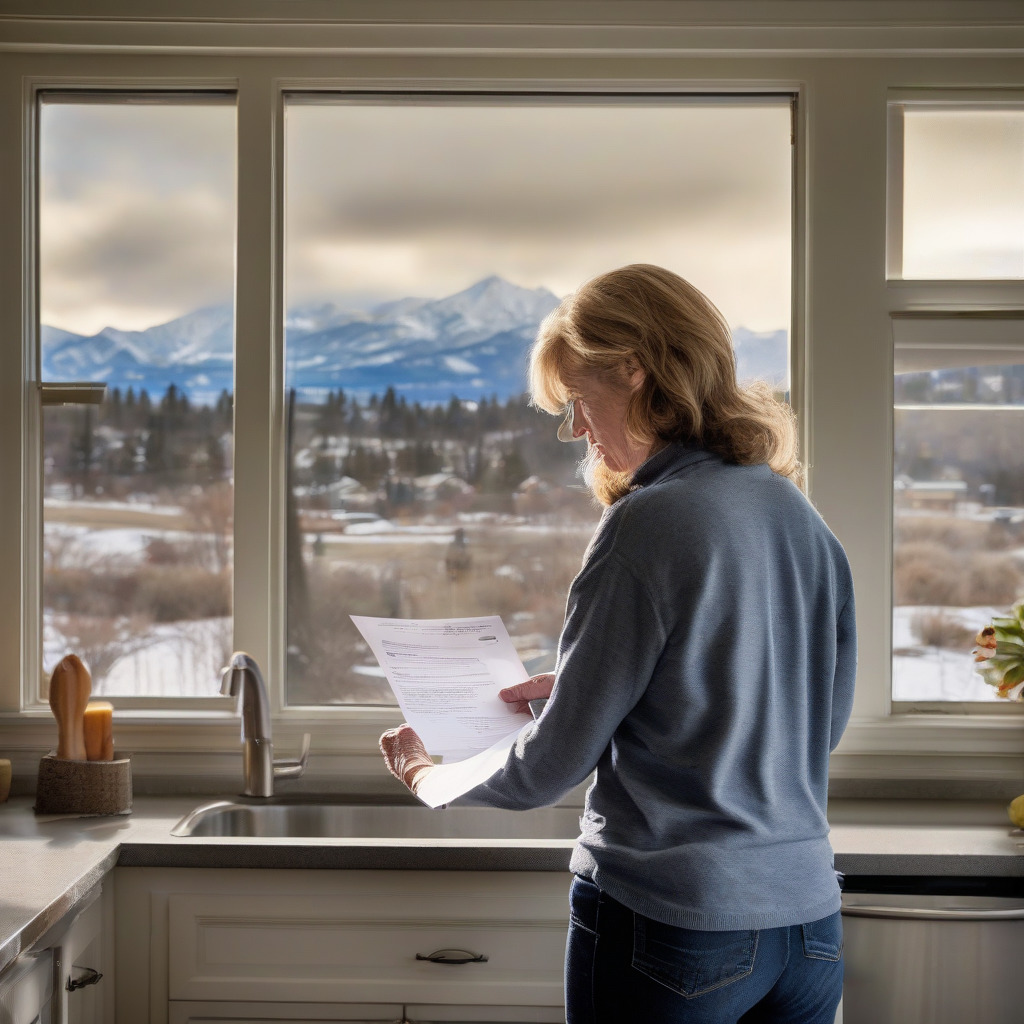
When a fast-moving hail cell crossed the south metro last June, Maria Gutierrez’s Centennial ranch house took what she thought was a manageable hit. A few dents in the gutters, some granule loss on the roof. Her insurance company sent an adjuster within the week.
The roofing contractor she hired to do the actual work quoted $19,500.
The gap wasn’t a misunderstanding. It was the policy she’d had for eleven years, the one she’d never actually read closely. A 2% wind-and-hail deductible on her $385,000 home meant she owed $7,700 before the carrier paid a dollar. At last renewal, the policy had been quietly converted to actual cash value coverage on her 14-year-old roof, so the insurance company depreciated the payout significantly. The resulting check wasn’t an error. It was the math.
Gutierrez’s situation isn’t unusual in 2026. It’s increasingly the norm.
Why Denver’s Hail Problem Is Structurally Different
Denver sits within what meteorologists call Hail Alley: the corridor stretching from eastern Colorado through Nebraska and Kansas where the collision of Gulf moisture, Rocky Mountain terrain, and cold Canadian air masses produces some of the most frequent and severe hail in the world. NOAA data consistently puts Colorado among the top three to five states for hail insurance losses, and the Front Range urban corridor gets a disproportionate share. If you’ve spent a summer here, you already know this. The sound of golf-ball-size hail hammering a car roof is not easy to forget.
The May 8, 2017 storm remains the turning point. That single event generated roughly $2.3 billion in insured losses, one of the costliest hail events in Colorado history. The neighborhoods that bore the worst damage—Centennial, Highlands Ranch, Aurora, Lakewood, Thornton—are the same dense suburban areas built out rapidly through the 1990s and 2000s. Large concentrations of similarly-aged roofs all hit replacement threshold at the same time. All filed claims within the same claim cycle. Carriers noticed, changed their underwriting, and haven’t looked back.
By 2018 and 2019, renewal packets already reflected tighter restrictions. By 2023, homeowners began encountering real obstacles to renewal and new coverage.
Who Is Still Writing Policies in Denver, and Who Isn’t
State Farm announced in 2023 that it would pause new homeowner policy applications in California. Less noticed: the carrier paused new homeowners policy writing in Colorado the same year. California’s insurance crisis became a national story. Colorado’s version mostly hasn’t, despite being a real and ongoing problem for buyers seeking new coverage.
American Family continues writing new business in the Denver metro, though its current restrictions around roof age and construction type require confirmation with a licensed agent for your specific property and ZIP code.
Farmers Insurance has reduced its appetite for Colorado homeowners insurance in recent years. Travelers has remained in the Colorado market and is generally accessible through independent brokers, though at substantially higher prices than five years ago.
Several regional and smaller carriers, including Colorado-based options available through independent agents, have remained more flexible than the national carriers. This is why working with an independent broker rather than a captive agent matters more in 2026 than it did before. Five years ago, calling whatever number was on your renewal packet was probably fine. It isn’t fine anymore.
The Colorado Division of Insurance tracks carrier activity and rate filings carefully. It reported significant rate increase approvals across multiple carriers in the 2022–2024 period—homeowners insurance rates across Colorado climbed roughly 30 to 50 percent over that five-year window, with Front Range ZIP codes at the steeper end. The DOI’s consumer services division can be reached at doi.colorado.gov, and its website includes a carrier lookup tool showing which insurers are licensed and actively writing in Colorado.
The Colorado FAIR Plan (CARPIP) is the state’s insurer of last resort for homeowners who can’t obtain coverage through the standard market. Enrollment has increased as carriers have tightened underwriting. The plan costs more than standard market coverage, carries lower limits, and is designed as a bridge, not a permanent solution. If CARPIP is the only option you’re being quoted, that’s a signal worth taking seriously—about your coverage exposure and about the urgency of finding an independent broker who can work harder at alternatives.
Are Premiums Going Up Metro-Wide, and Will a Claim Make It Worse?
The 30–50% statewide rate increase figure through 2023 is documented in Colorado DOI data and corroborated by NAIC data. It’s spread broadly across the metro, not concentrated in a few ZIP codes.
Whether filing a claim will get you dropped depends on specifics. A single hail claim on a home with an otherwise clean loss history is unlikely by itself to trigger non-renewal. Multiple claims in a short window are a different matter. So is a claim on a home where the carrier has already decided it wants to reduce Front Range exposure—in that scenario, the claim may simply accelerate a non-renewal that underwriting was already considering. The claim becomes the excuse for a decision that was coming anyway.
For many Denver homeowners, the calculation has changed fundamentally. If your damage is moderate, your deductible is high, and your carrier is one that’s been pulling back from Colorado, filing a claim may produce a modest net payout while putting your renewal status in play. Most people haven’t updated their mental model to match that reality.
The Policy Landmines Most Denver Homeowners Don’t See Until It’s Too Late
Three provisions are responsible for the majority of post-storm payout surprises in the Denver metro. As we’ve noted in our home & property coverage, understanding your policy before a storm hits is the difference between a manageable loss and a financial shock.
A percentage-based wind and hail deductible is calculated against the home’s insured value, not as a flat dollar amount. On a $400,000 home, a 1% deductible means $4,000 out of pocket before insurance pays anything. At 2%, it’s $8,000. These deductibles have become standard on Front Range policies over the past five years. Some carriers have added them to renewals without prominent disclosure—buried below the premium summary, in the dense policy language most people reasonably never read. Check your declarations page now, before a storm, under “Deductibles.” If you see a percentage figure next to “Wind/Hail,” multiply it by your coverage limit. It takes ninety seconds and you really want to know the number.
Actual cash value versus replacement cost coverage on your roof creates a second major gap. Replacement cost value (RCV) pays to replace your damaged roof at current material and labor costs. Actual cash value (ACV) pays that amount minus depreciation. For an older asphalt shingle roof in Denver, depreciation can eat 40 to 60 percent of the replacement cost—on a $20,000 job, that’s $8,000 to $12,000 coming out of your pocket. Many carriers have shifted to ACV roof coverage at renewal or when a home changes hands, sometimes without making it obvious that the change happened. You may still be able to add an endorsement restoring RCV coverage, but you have to ask your agent directly. It won’t come up otherwise.
Cosmetic damage exclusion endorsements are the newest development, and for Front Range homeowners, arguably the most consequential. These limit coverage to functionally impaired roofing only—meaning water is getting in, or structural integrity is compromised. Denting, pitting, or granule loss that doesn’t affect the roof’s performance is excluded. They’ve been appearing in Colorado renewals with increasing frequency, and the Colorado Division of Insurance has issued guidance on carrier disclosure requirements for these endorsements amid regulatory proceedings over whether certain applications were adequately communicated to policyholders. The exclusion is legal and enforceable when properly disclosed. The problem: in a lot of Front Range hail events, most of the visible damage is cosmetic by that definition, and homeowners find out only when the claim comes back denied.
The 48-Hour Window Before Anyone Else Arrives
What you do in the first 48 hours after a hail event matters more than most homeowners realize. Colorado adjusters pull independent storm data, and your documentation needs to be consistent with that data.
Start with time-stamped photos and video of every affected surface as soon as it’s safe: roof, gutters, downspouts, AC condenser fins, window screens, wood decking, fencing, any vehicles parked outside. An adjuster who sees dented condenser fins and pocked window screens has physical evidence of hail size and impact force. An adjuster who sees only a few roof photographs has more room to minimize findings. Document everything, including things you’re sure won’t be part of the claim. You can always not use the photos.
Document the hail size independently. Weather Underground’s network of personal weather stations covers the Denver metro well—search for stations near your address and pull the storm log. The Community Collaborative Rain, Hail and Snow Network (CoCoRaHS) has active volunteer observers across the Front Range who log hail size and duration. NOAA’s Storm Events Database is publicly searchable by county and date. A logged hail event showing significant hailstones in your ZIP code is a meaningful data anchor when an adjuster’s report seems to minimize what actually hit your neighborhood.
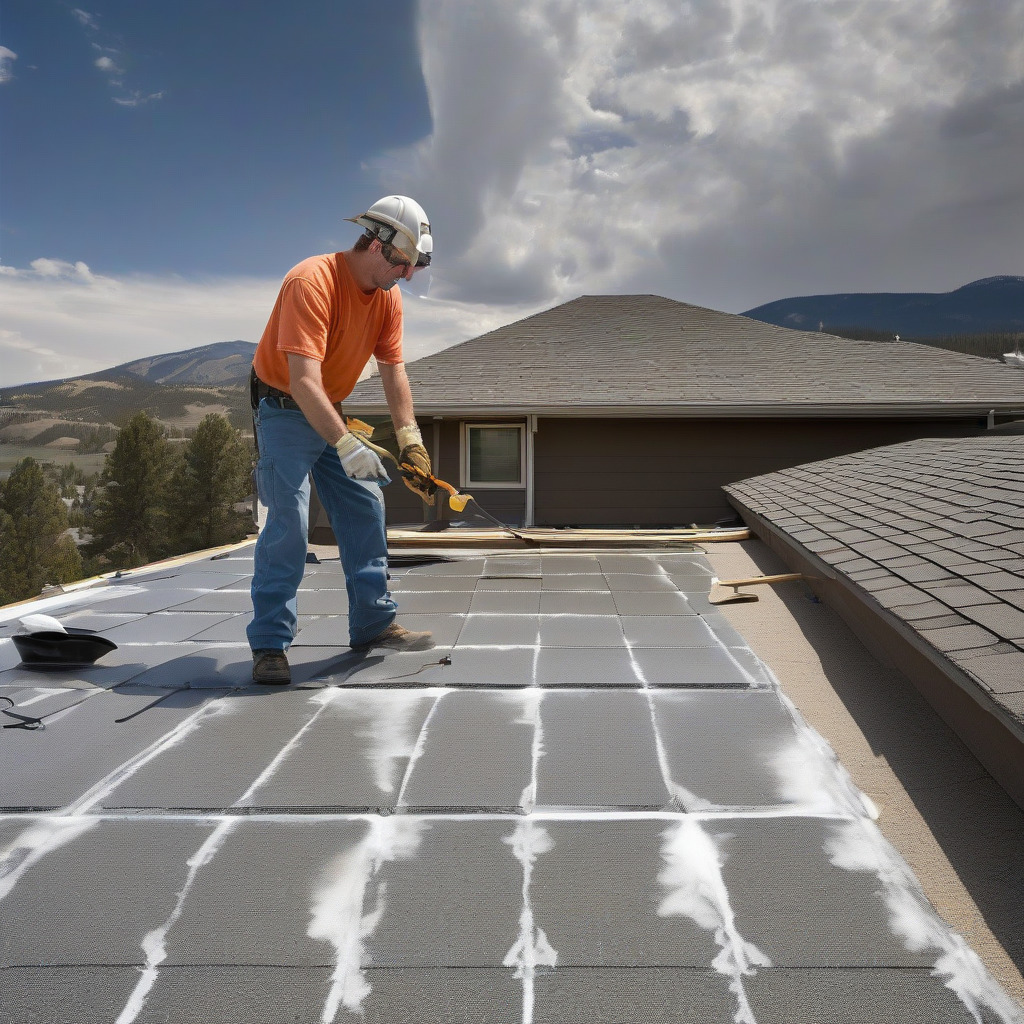
Get a roofing contractor on-site before you file the claim if you can. Not to do repairs—just to document. An experienced Denver contractor can assess within a visual inspection whether you have functional damage or a marginal situation, and that assessment is worth having before you decide whether to file. It also gives you a second set of eyes on the roof before anyone else is looking.
How to Know Whether to File or Pay Out of Pocket
Denver roof replacement currently runs $12,000 to $25,000 or more depending on size, pitch, material, and what’s found underneath. Your decision turns on three numbers: your deductible dollar amount, the estimated repair or replacement cost, and your honest read of the renewal risk given your carrier’s current posture in Colorado.
If your deductible is $8,000 and the net payout after ACV depreciation is going to be modest, the claim produces almost nothing while introducing claim history. If your deductible is $2,000 and the replacement cost is $18,000 with full RCV coverage, filing clearly makes sense. The math isn’t complicated—the problem is that most homeowners don’t have all three numbers when they’re standing in the driveway after a storm. Get the numbers first.
Hail season in Denver runs April through September, with peak activity in May through July. Golf-ball-size hail (1.75 inches or larger) is common in supercell storms tracking northeast off the Rockies, and events of that magnitude typically warrant a professional roof inspection to determine whether functional damage is present regardless of what you decide about filing.
The Adjuster on Your Roof Doesn’t Work for You
A company adjuster is a salaried employee of your insurance carrier. Most do their jobs honestly. That doesn’t change the structural fact that their employer is the entity writing the check.
An independent adjuster is a contractor hired by your carrier on a per-claim basis—common when claim volume spikes after a major storm. They also work for the carrier, not for you, despite the word “independent.”
A public adjuster (PA) is licensed by the state and hired by the homeowner to represent your interests in the claims process. They assess the damage, prepare or review claim documentation, and negotiate with the carrier on your behalf. In Colorado, they typically charge 10 to 15 percent of the total settlement. On a $20,000 claim, that’s $2,000 to $3,000.
Whether a public adjuster is worth hiring depends on the specific claim. For straightforward situations where the insurer’s estimate is close to contractor quotes, a PA probably doesn’t pencil out. Where the initial assessment appears significantly low—missed damage areas, ACV depreciation disputes, claims involving functional versus cosmetic disagreements—representation often pays for itself. The most useful thing to do is get a contractor’s estimate first and compare it to the carrier’s figure. If they’re close, you probably don’t need the PA. If they’re far apart, you might.
The most consequential first-48-hour mistake homeowners make is failing to document damaged materials before anything is cleared away or repaired. Carriers pull storm data independently. Documentation gaps hurt the homeowner, not the carrier.
Colorado’s Legal Clock and Your Rights Under State Law
Under C.R.S. § 10-4-110.8, your insurer must acknowledge your claim within 10 days of receipt and must accept or deny it within 60 days of receiving a complete proof of loss. If the carrier needs more information, it must communicate that need in writing within the same window. Violations of these timelines can support a bad faith claim.
The statute of limitations for filing suit against your insurer over a denied or underpaid hail claim in Colorado is two years from the date of the loss—not the date of the denial. This catches people. Homeowners who assume they have two years from the denial letter have found themselves time-barred. Mark your calendar from the storm date.
Denver’s building permit requirement for roof replacement is not optional. Any roof replacement in the City and County of Denver requires a permit from Denver Community Planning and Development. Work done without a permit creates a documentation gap that can complicate future sale of the home, void some warranty protections, and in some cases create problems with subsequent insurance claims. Reputable roofing contractors pull their own permits. Any contractor who suggests skipping that step is a red flag worth heeding.
The Colorado Division of Insurance is the state regulatory body with authority over carrier conduct, rate filings, and claim handling practices. Its consumer complaint portal at doi.colorado.gov accepts formal complaints against carriers and initiates regulatory review. Carriers take DOI complaints seriously. If you believe your claim has been mishandled, that portal is a more effective escalation tool than most homeowners realize.
What to Do If You Can’t Get Coverage, or Can’t Afford What’s Left
CARPIP is available to Colorado homeowners who can’t obtain coverage through the standard market. Coverage is basic, premiums are higher, and limits may not fully cover replacement cost on newer or higher-value homes. But it keeps you insured while you work the problem, and right now that matters.
Independent insurance brokers—not captive agents who represent a single carrier—have access to specialty and surplus lines markets that don’t show up in standard carrier searches. Surplus lines carriers operate outside the standard admitted market and can offer coverage on risks that admitted carriers won’t write, though at higher premiums and without the same state guarantee fund protections if the carrier fails. For Front Range homeowners with difficult properties—older roofs, prior claims, high-value homes in hail-exposed ZIP codes—the surplus lines market may be the realistic option. Ask an independent broker specifically which admitted carriers are still actively writing new business in your ZIP code right now, and if none, which surplus lines carriers are active in Colorado for residential property. That’s specific enough that how they answer will tell you something about whether they actually know the market.
The Colorado Division of Insurance’s consumer assistance unit offers direct help in these situations. Its staff can explain your rights under Colorado law, help you parse a denial letter, and point you toward resources, including the CARPIP application process. Reach them through doi.colorado.gov.
Read the declarations page. Check the deductible type. Ask your agent directly whether your roof is covered at replacement cost or actual cash value, and whether your policy includes a cosmetic damage exclusion. Those questions take twenty minutes. The answers are worth knowing before June, not after a storm when the clock is already running.
CityDesk Denver covers local business, development, and economic policy in the Denver metro. Story tips and source inquiries can be sent to our editorial desk.